• The forum software have been upgraded to the latest version.

    If you notice anything that looks off, or does not work, please let us know.

    For more information, click here.

Blog Aginor's Painting Blog

Yeah good idea.

Everything is on a go slow here, Boris announced last night new measures to try and fight the spread but he didn't make it crystal clear who should go to work so I'm at work until my employer says otherwise.

Same here.
Right now we are in a slightly weird position, with a similar "semi lockdown". I am at work, but only because I work in a very small company and there is nobody in my room except me.
May the great horned rat protect-protect you all-all
 
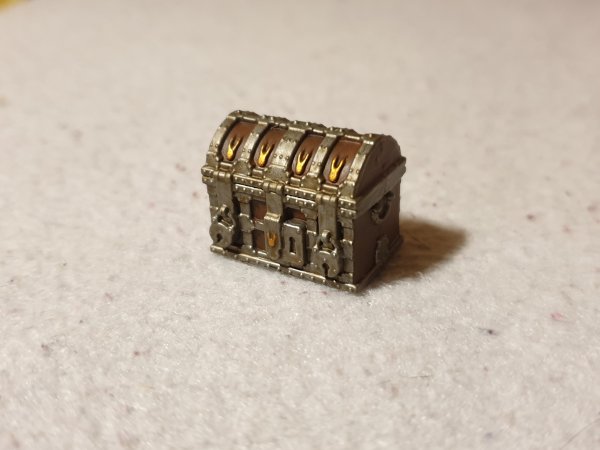
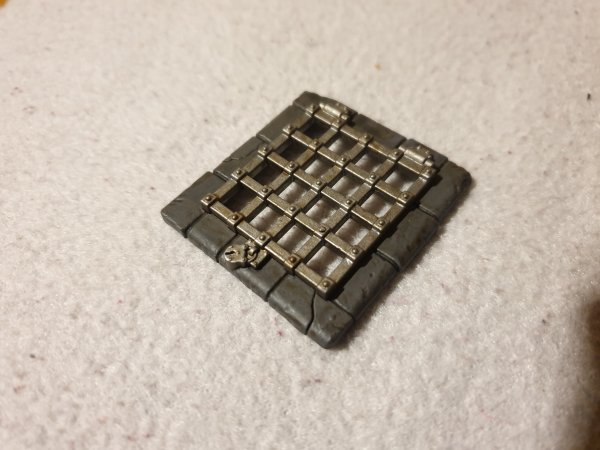
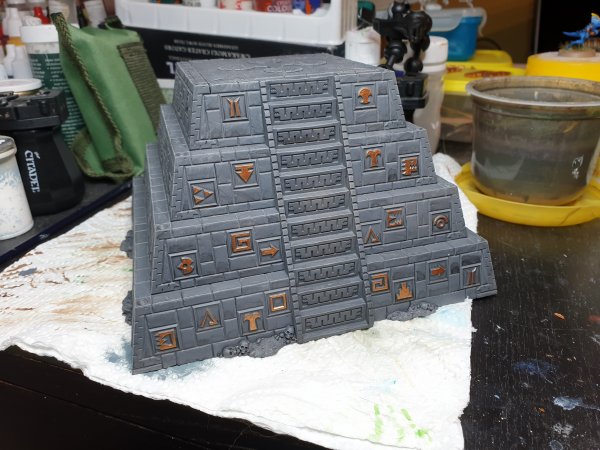
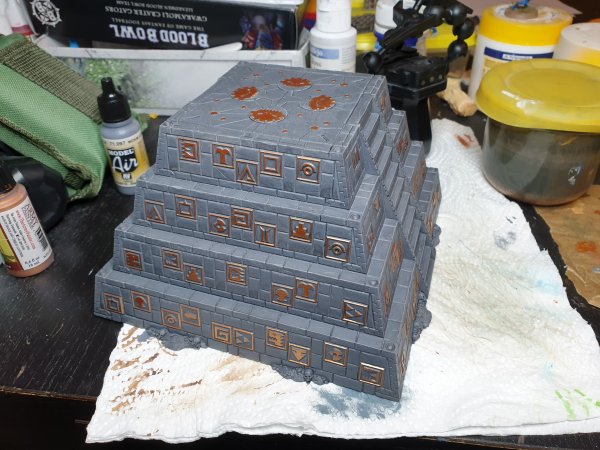
I kinda stalled with the pyramid.
Got distracted by playing Dirt Rally 2.0 online, TWW2 offline, playing D&D, and doing some other stuff.

Among other things I finally got around to experimenting with silicone molds for duplicating stuff. I plan to use it for creating objects for terrain pieces. Had some good and bad experiences already. Will post some pics soon.
 
Among other things I finally got around to experimenting with silicone molds for duplicating stuff. I plan to use it for creating objects for terrain pieces. Had some good and bad experiences already. Will post some pics soon.

Can't wait to see what you have done with it. It could be of use for me in the futur ;)
 
Here is the story:

In 2016 when I started with the hobby and bought my first few plastic kits I quickly realized that some bits would look awesome on terrain pieces, or that I could even fill up units (like 2 Skink boxes put you short of two Skinks to field them in AoS).
So I bought:
- two component silicone
- a can of release agent
- stewalin (works like plaster but synthetic and harder)
- material to build casting walls
- tools
for about 100 bucks.

I also bought a set of resin objects from somewhere, containing a few crates, casks, sacks and that kind of stuff. My goal was to try and reproduce those as they have relatively simple shapes and aren't too big, but still have enough detail to judge quality.

...and then I put all of it into a cupboard and walked away for four years. Hobby ADHD at its best.

Two years ago I thought about the topic once again. But I had not done anything with silicone molds previously so I was a bit reluctant to try it. Instead I got myself some Oyumaru, also called "blue stuff", and tried making molds that way. That worked halfway well and i created my first few models out of some thermoplastic material that I just kneaded while hot and pressed into the molds manually. I produced two halfway OK looking Dryads for my wife. But I quickly realized that I would not be able to produce high quality that way.
So I built a small casting box out of plasticard sheets...

...and put everything in the cupboard because hobby ADHD.
Another two years passed.

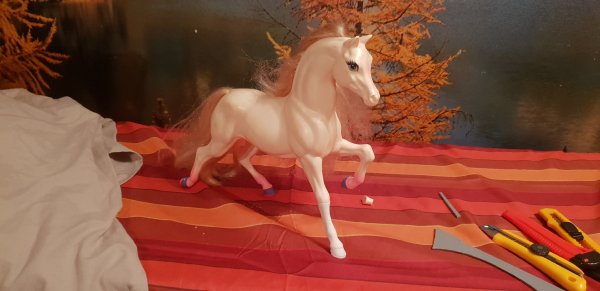
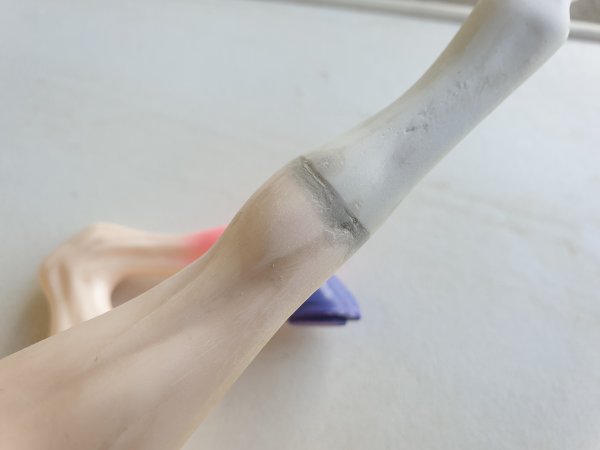
Two weeks ago my daughter found two 30 year old Barbie horses at my in-laws' house, they once belonged to my wife. Sadly one of them has been missing a part of its leg since the 1990s. That made my daughter a bit sad since it wouldn't stay upright, so she asked me if I could help the horse.
So I talked to my brother (who is insanely more talented than me in such things) to see whether we could build an artificial limb, and he said "if we could only build a mold from the undamaged one's leg" which was when it clicked in my head. I mentioned the silicone and we went to work two days later (and yes, keeping distance, there is still a pandemic going).

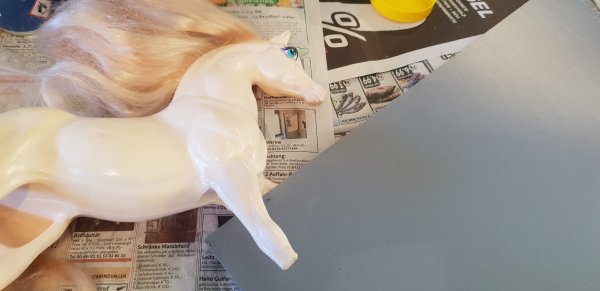
Here is the horse:

Resized_20200521_155301.jpg

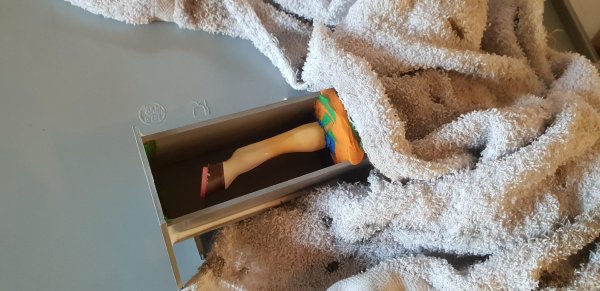
And here you can see the casting box, with a seal made of play dough and sprayed with release agent.
Resized_20200521_164820(1).jpg

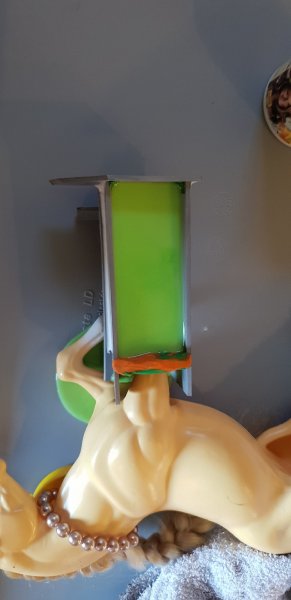
I then mixed the silicone (it is a 1:1 mix of two components) and filled it in. The box wasn't completely sealed so we had a small leak, but the silicone hardens within a few minutes so everything turned out to be OK.

Resized_20200521_170421.jpg

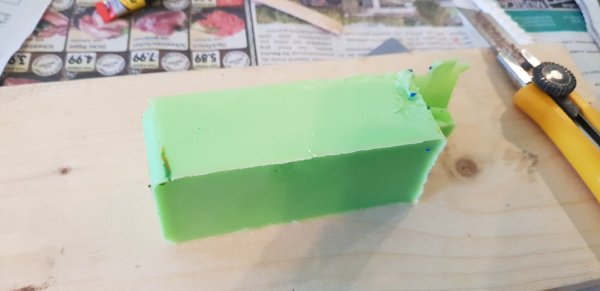
40 minutes later we destroyed the box and took out the mold:
Resized_20200521_175852.jpeg

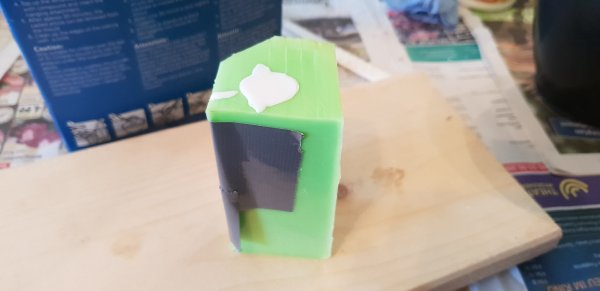
We carefully cut it open on one side to remove the leg from the mold. Then we closed it again, securing it with some duct tape. The mold was done. Time to fill it!

Stewalin is easy to handle, just mix it with water 4:1 and pour it in. Shake to remove bubbles and wait half an hour. It doesn't shrink at all (or very little), unlike resin.
Resized_20200521_181621.jpg

I'll end the post here. Rest of the story coming soon.
 
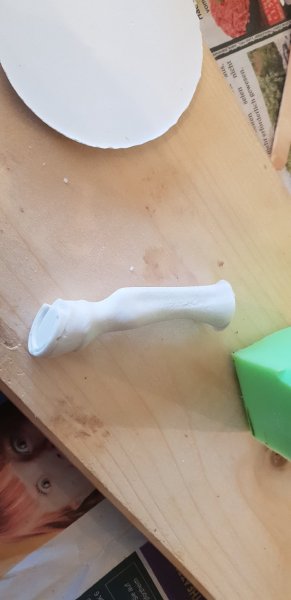
We waited a tad longer than the box says, just to be sure, then we took out the limb.
The casting quality looked good, even though it was our first try ever.

Resized_20200521_200426.jpg

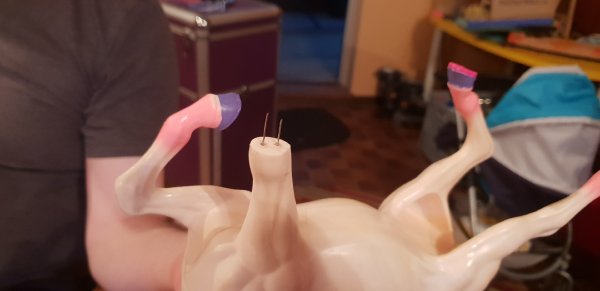
We sawed off a part of the stump to make it even, and also to not have the attachment be the thinnest (and thus weakest) part of the leg. We used paper clips as pins, glued into holes which we bored with a pin vise, using epoxy glue. That's when we realized how hard stewalin is. It is basically ceramic. It was some work to put holes in there.

Resized_20200521_211853.jpg

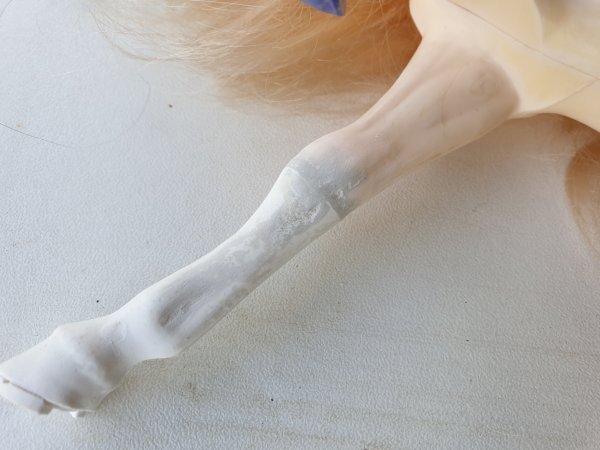
Here is the horse with its new leg.
Resized_20200521_214411.jpg

I used "Plasto" body putty to level the whole thing.
20200524_151902.jpg 20200524_151922.jpg

The only thing missing now is a bit of paint.
I already told my daughter that this horse will need to be handled with care.
Stewalin is not the ideal material for this. It is quite hard so it will break if not handled with care. Right now I am searching for something that is as easy to handle and a bit softer.

This project got me to finally try making molds, and it was fun. So I finally got around to trying what I originally wanted. After four years.

So the next post will be about that. Stay tuned. :)
 
Last edited:
Ok here is the promised next post about silicone molds:

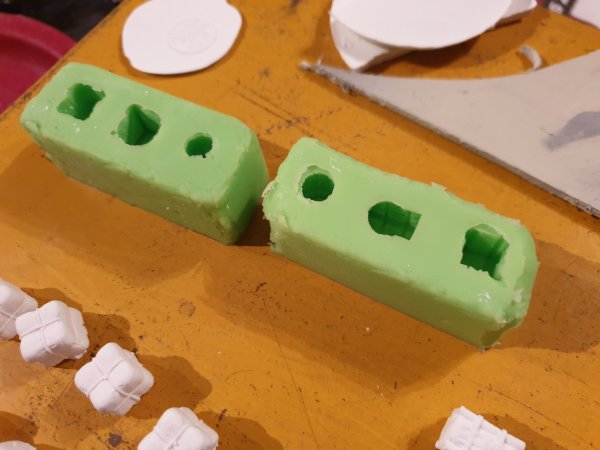
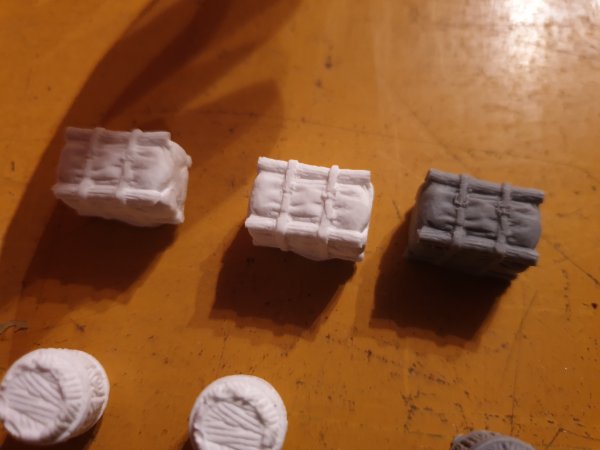
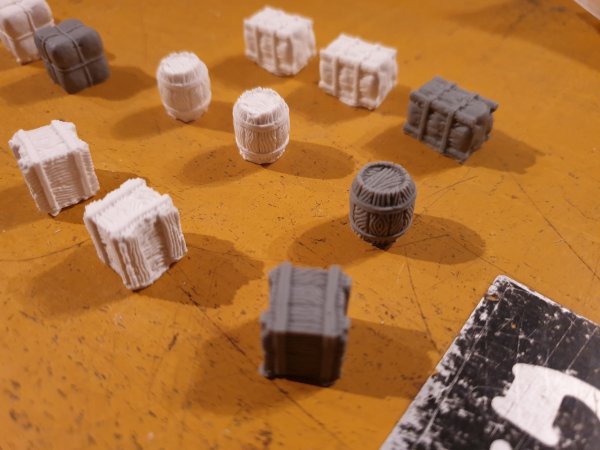
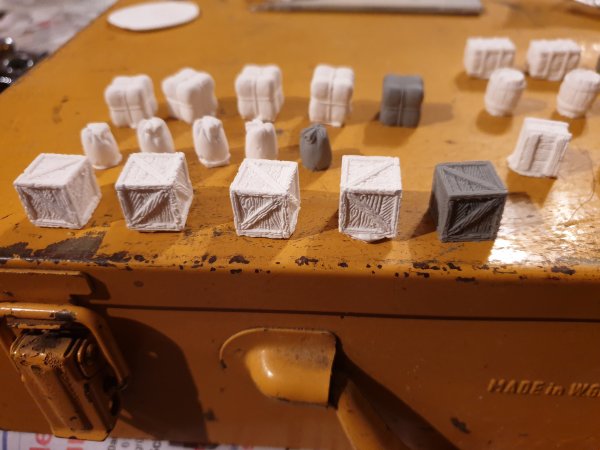
The resin objects pack I bought contains six different shapes. I made silicone molds that each have three of those shapes.
20200527_233735.jpg

The molds were made this way:
1. Build a box large ejough in all dimensions. You can use play dough to make the inner edges of the box rounded, that will hell getting the finished mold out.
2. Put the original parts in, using poster putty. That side will of course be flat in the end, so attach them at the bottom
3. Spray with release agent and wait a few minutes.
4. Mix silicone well and pour it in. Shake the bubbles out (vibration works well, like from a massage thing or - like I do it - from a nail lacquer shaker that I use for shaking my colors. But in a pinch you can just hammer on the table next to the mold with your fists) Wait half an hour.
5. Destroy the box, or at least one or two walls so you can get the mold out
6. The mold is very elastic, you can easily remove the originals.
7. Fill in Stewalin, shake again. Wait for 30min.
8. Remove your finished parts. They might have a slight "puddle" at the bottom but it is easy to remove.


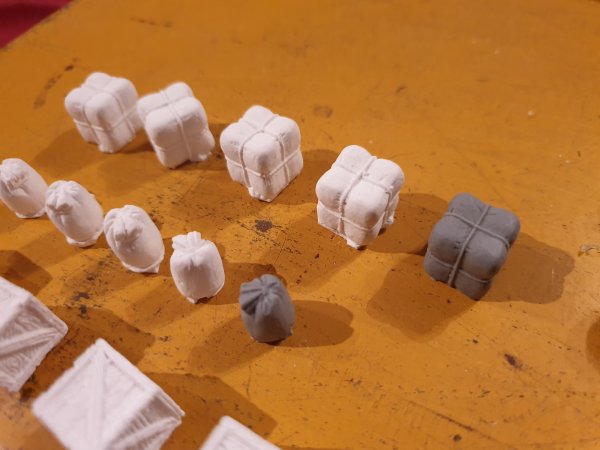
The molds are super easy to use. Here are the parts I made (white) next to the originals. Most of the details are there even though I have had no previous experience with creating molds.
The replicated models are heavier and more brittle though. Just act as if they were metal minis out of tin.
I haven't painted Stewalin yet but people say it is good to paint because it is smooth and hard. Will try that soon.

20200527_233708.jpg 20200527_233658.jpg 20200527_233637.jpg
 

Attachments

  • 20200527_233623.jpg
    20200527_233623.jpg
    3.4 MB · Views: 2
awesome stuff, the details are great.

Looking forward to more ;)

Grrr, Imrahil
 
Of course everyone with decent 3d modeling skills and a resin printer can do better these days, but it is still a kinda interesting thing to try.

The next post will provide a case which didn't work.
 
Here is the story:

In 2016 when I started with the hobby and bought my first few plastic kits I quickly realized that some bits would look awesome on terrain pieces, or that I could even fill up units (like 2 Skink boxes put you short of two Skinks to field them in AoS).
So I bought:
- two component silicone
- a can of release agent
- stewalin (works like plaster but synthetic and harder)
- material to build casting walls
- tools
for about 100 bucks.

I also bought a set of resin objects from somewhere, containing a few crates, casks, sacks and that kind of stuff. My goal was to try and reproduce those as they have relatively simple shapes and aren't too big, but still have enough detail to judge quality.

...and then I put all of it into a cupboard and walked away for four years. Hobby ADHD at its best.

Two years ago I thought about the topic once again. But I had not done anything with silicone molds previously so I was a bit reluctant to try it. Instead I got myself some Oyumaru, also called "blue stuff", and tried making molds that way. That worked halfway well and i created my first few models out of some thermoplastic material that I just kneaded while hot and pressed into the molds manually. I produced two halfway OK looking Dryads for my wife. But I quickly realized that I would not be able to produce high quality that way.
So I built a small casting box out of plasticard sheets...

...and put everything in the cupboard because hobby ADHD.
Another two years passed.

Two weeks ago my daughter found two 30 year old Barbie horses at my in-laws' house, they once belonged to my wife. Sadly one of them has been missing a part of its leg since the 1990s. That made my daughter a bit sad since it wouldn't stay upright, so she asked me if I could help the horse.
So I talked to my brother (who is insanely more talented than me in such things) to see whether we could build an artificial limb, and he said "if we could only build a mold from the undamaged one's leg" which was when it clicked in my head. I mentioned the silicone and we went to work two days later (and yes, keeping distance, there is still a pandemic going).

Here is the horse:

View attachment 71925

And here you can see the casting box, with a seal made of play dough and sprayed with release agent.
View attachment 71926

I then mixed the silicone (it is a 1:1 mix of two components) and filled it in. The box wasn't completely sealed so we had a small leak, but the silicone hardens within a few minutes so everything turned out to be OK.

View attachment 71927

40 minutes later we destroyed the box and took out the mold:
View attachment 71928

We carefully cut it open on one side to remove the leg from the mold. Then we closed it again, securing it with some duct tape. The mold was done. Time to fill it!

Stewalin is easy to handle, just mix it with water 4:1 and pour it in. Shake to remove bubbles and wait half an hour. It doesn't shrink at all (or very little), unlike resin.
View attachment 71929

I'll end the post here. Rest of the story coming soon.

Ok here is the promised next post about silicone molds:

The resin objects pack I bought contains six different shapes. I made silicone molds that each have three of those shapes.
View attachment 72019

The molds were made this way:
1. Build a box large ejough in all dimensions. You can use play dough to make the inner edges of the box rounded, that will hell getting the finished mold out.
2. Put the original parts in, using poster putty. That side will of course be flat in the end, so attach them at the bottom
3. Spray with release agent and wait a few minutes.
4. Mix silicone well and pour it in. Shake the bubbles out (vibration works well, like from a massage thing or - like I do it - from a nail lacquer shaker that I use for shaking my colors. But in a pinch you can just hammer on the table next to the mold with your fists) Wait half an hour.
5. Destroy the box, or at least one or two walls so you can get the mold out
6. The mold is very elastic, you can easily remove the originals.
7. Fill in Stewalin, shake again. Wait for 30min.
8. Remove your finished parts. They might have a slight "puddle" at the bottom but it is easy to remove.


The molds are super easy to use. Here are the parts I made (white) next to the originals. Most of the details are there even though I have had no previous experience with creating molds.
The replicated models are heavier and more brittle though. Just act as if they were metal minis out of tin.
I haven't painted Stewalin yet but people say it is good to paint because it is smooth and hard. Will try that soon.

View attachment 72020 View attachment 72021 View attachment 72022

Your casting projects bring me a lot of joy. Great to see all those mass produced pieces!
 
Thanks! But I am not very confident concerning my painting, I have never been good at painting (or tried painting during the last 20 years for that matter) and I know it can be done much better because I see those great models on the Internet every day.
Now, a few months after making the above models I am fairly sure even I can do it better, and then I think "Why post something on the web I am not really convinced of myself? Better wait and see if I can do a really good one".
But y'all helped me so much already, I feel I owe you some pics even though those models aren't perfect. :)


Ok, back to November 2016. The Knights were done, so it was time to do the Behemoth from the starter box, my first big model.
I was pretty nervous since I really wanted to do it well and feared I might fail. The longer I painted the more confident I got, even though many many things did not go, or end up, as expected.

Here is my Troglodon:
View attachment 28587 View attachment 28588 View attachment 28589

Notes:
- The paint scheme is based on pictures of adult Green Iguanas. They often have orange feet and spikes, and a bright face. I didn't like the Troglodon paint scheme like GW did it on the shop's pics, so I thought REALLY long about this and tested paints on empty sprues.
- The whole beast was painted white (it was the first model I used a white spray primer on), and all the green parts are just shaded and drybrushed. No direct painting. Where the paint was a bit too strong I drybrushed with white.
- I discovered that shades on metal colors make metallic paint effects. You can see it on the reigns.
- The Oracle was done using the same techniques as for the Starpriest, since I wanted him to look similar
- Two of those rocks on the base are actual stones, the other two are cork bungs from wine bottles, I wanted to test whether it is possible to shape halfway believable rocks that way. It works.
- I already broke off the tip of the tongue twice. One I glued it on again, the other time I just covered it up with paint so it isn't that noticable anymore. Next time I break it off I will maybe replace the tongue with the spare one from my other kit. I also considered attaching it using a magnet, that will probably help.
- I broke off the flag thing on top, and since I knew I would hit it again I didn't glue it back on but used two of my tiny magnets. That way if I touch it it doesn't break but move out of the way. I love those neodymium magnets. :)
- Overall I like the Troglodon very much, but it is a really fragile model. I don't even know how I would transport it in one of those GW or Feldherr foam storage boxes. It has thin antennas and stuff sticking out in every direction! I transport it standing upright in a shoe box, filled with paper towels.
- I also made a mistake that cost me some time to correct. I glued the neck ring on before painting. Afterwards I spent an hour trying to paint the visible parts on the inside.

I love the color choices you made for the trog! I especially like the slightly darker bit shaded up the dorsal; it makes it look like the fin is slightly translucent and you are seeing the torso coming through!!
 
Back
Top