Skink
LizardPadre
New Member
- Messages
- 28
- Likes Received
- 4
- Trophy Points
- 3
Lifted from my ongoing, occasional campaign/story thing ..
Prologue
Living Gods
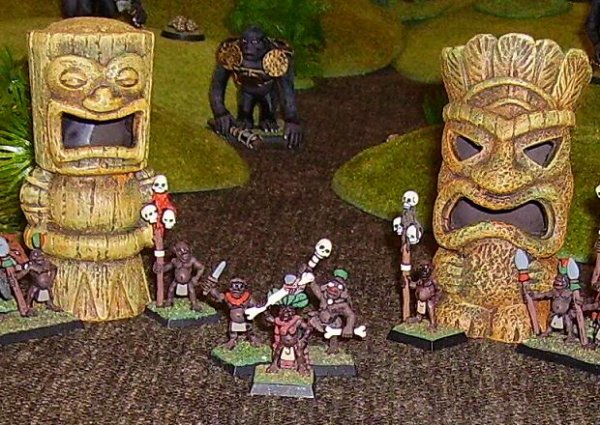
The living god Ta-Dino-Po, last surviving spawn of the mighty father god Doh-Oda-Toh (though many pygmy tribes had yet to learn this was so), had commanded every warrior of the Inni-ano tribe to assemble. The gathering was to take place at a sacred site of the ancient sibling gods Brobok and Besbak, which seemed an ominous choice to the Inni-ano’s chieftains and shamans, for never before had the living gods acknowledged the old pygmy gods. It had long been accepted by all the tribes that the living gods had driven the squabbling, immortal brothers into exile, and furthermore that Ta-Dino-Po, his siblings and his father were so filled with ‘here-and-now’ power that they had failed even to notice the old gods’ departure. The wisest shamans preached that the old gods had merely been dreamt by the living gods, a dream that had been forgotten upon awakening.
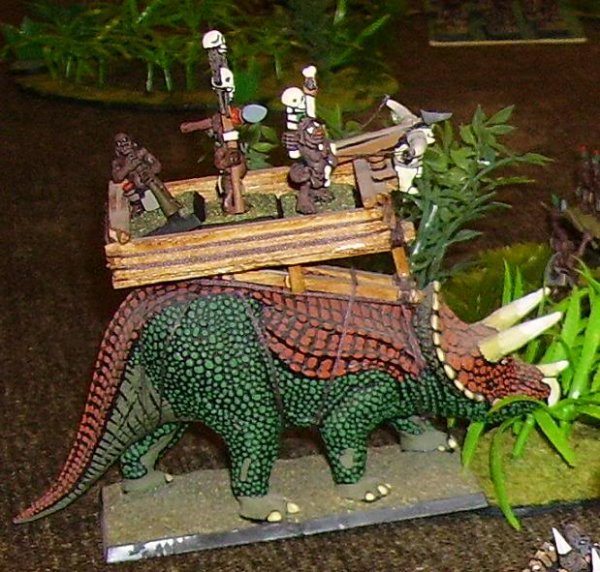
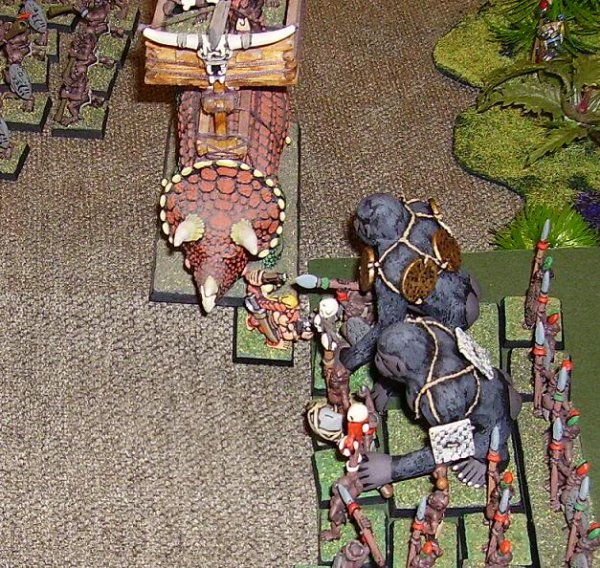
Of course that did not mean that the statues of the old gods had also disappeared, for they were very definitely not the stuff of dreams. They were made of stone, petrified wood and hardened volcanic ash-clay, and if the living gods wanted to chase them away too then they would have to use mighty magics or one of the Putoo Tribe’s stegadons to lift and shift them. Several of the pygmy tribes still harboured respect for the old gods, and secretly tucked away in recesses and even inside the (hollow) statues were the rotting remains of many a placatory offering. It seemed a very sensible precaution to keep both old and new gods, the dead and the living, happy!
There was something worrying the Inni-ano more than the strange choice of meeting place, and that was the terrifying rumour that Ta-Dino-Po’s siblings, the living gods Bo-Tana-Oon and Go-Akill-An, had been killed in battle. Such a claim seemed to make little sense, of course, for how could someone kill an immortal being? Yet a gnawing doubt ate at many in the tribe. Could there be some truth in the claim? The story was said to have come from gibbering Olobol warriors who had fled from a battle to the west. Of course every Inni-ano knew that you could not trust any Olobol, but this was a lie that even an Olobol would surely not dare to tell. To claim a god had died was blasphemy of the worst kind, which would inevitably curse the speaker of such words. Even the Olobol were not that foolish.
Not that anyone intended to question Ta-Dino-Po about the matter. The living gods were to be listened to and obeyed, not spoken to.
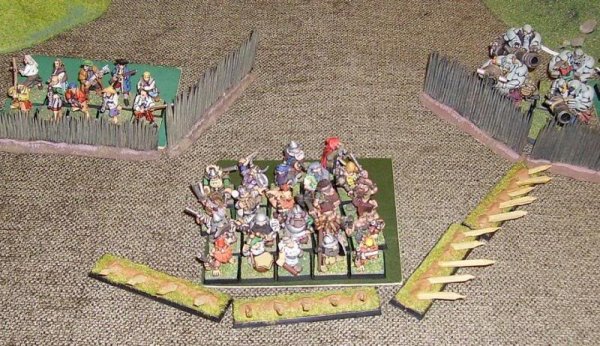
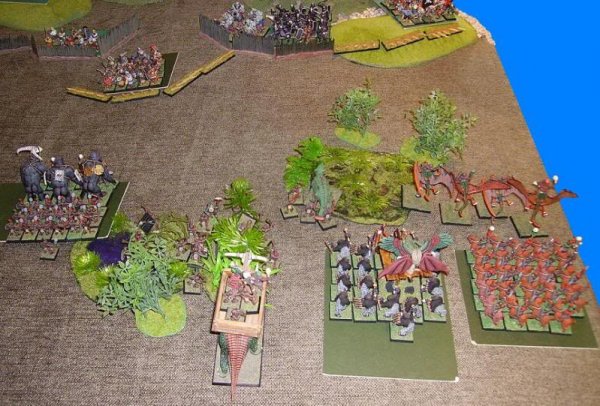
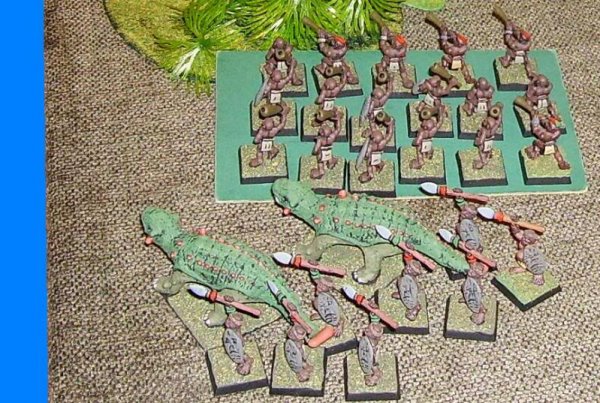
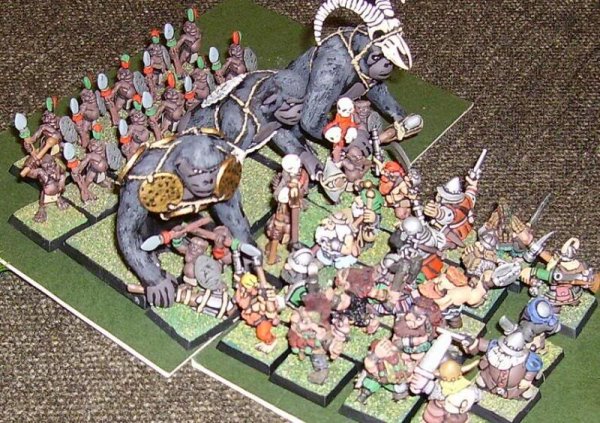
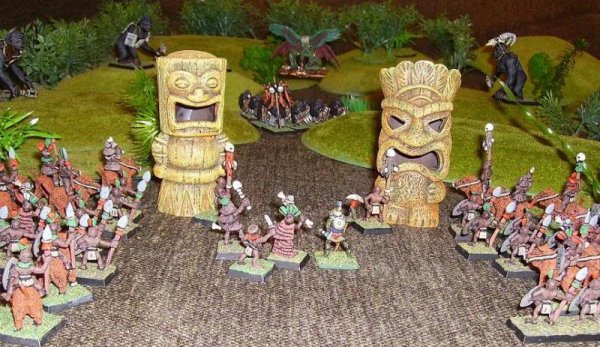
So it was that the tribe now stood waiting at Old Gods’ Gate - the entrance to the Sacred Gardens. They had allowed their gorillagors to stray into gardens, for it had long been accepted that the great beasts were gifted to the Inni-ano by the old gods, and as such they were probably permitted to eat of the fruit of the garden. The pets of the old gods eating the old gods’ food. Why not? The old gods were no longer there to eat it, and it would be a shame to waste it.
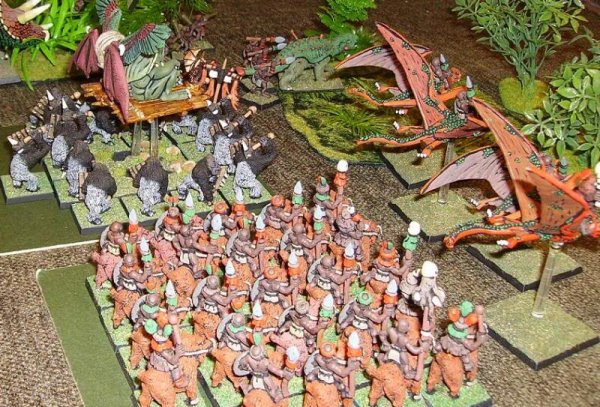
The rest of the tribe’s fighters, foot warriors and those mounted on pygmy boars, were arrayed in two cohorts upon either side of the gate.
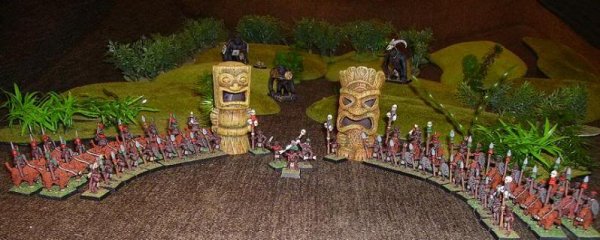
Chieftain Ri-Ri-Kut stood before the gateway itself, flanked by his son, Ho-Ri-Gon and the tribe’s high shaman Pal-Lal-La-Ba-Ro. He was impressively dressed in his ceremonial garb, the skin of the first pygmy boar to leap the Oodle Gap and a green feather headdress. This was all much more imposing than his son’s loincloth and necklace of scarlet Dung Flowers. In accordance to the accepted ritual for occasions such as this, father and son held their weapons aloft, so that the shadows thus cast fell across their eyes. Pal-Lal hopped busily about from foot to foot as if the ground were burning the soles of his feet. Ri-Ri-Kut had no idea if that was the proper way for a shaman to comport himself at a time such as this, but considering the nature of shamans it was most likely that the proper way to behave right now was improperly, and Pal-Lal was even more contrary than most of his kind.
Suddenly, moving with a fleetness and grace the pygmies could only wonder at, Ta-Dino-Po arrived before them. He wore head and chest-adornments that glinted in the sunlight, and his green flesh (all the new gods were green) shined as if Ta-Dino-Po had only just emerged from water. Perhaps he had? Chief Ri-Ri-Kut waggled his bone-shafted, stone axe about in greeting, and was watched by the unblinking deity.
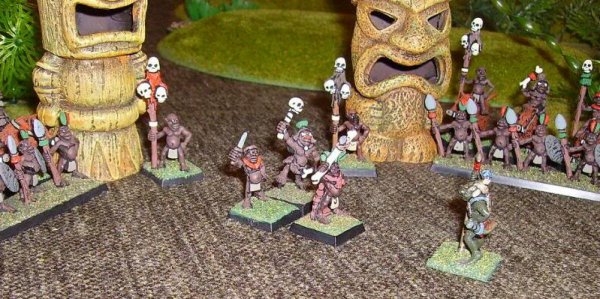
After a few moments, and just as his arm was beginning to ache, the chief decided that was enough and ceased his efforts. Trying to look humble and subservient, he studied his master for a clue as to what he was to do next. Usually this would be to listen, but the living god did not seem to be in the mood for talking. Then it occurred to Ri-Ri-Kut that Ta-Dino-Po was not looking at him, but behind him - staring at something in the Sacred Garden perhaps? Realising the gorillagors had simultaneously fallen silent, the chief experienced a surge of nervous anticipation and slowly turned around to see what had caught the god’s and monstrous gorillas’ attention. Every other Inni-ano warrior did the same, until the whole tribe was looking at a new arrival in the garden of the gods.
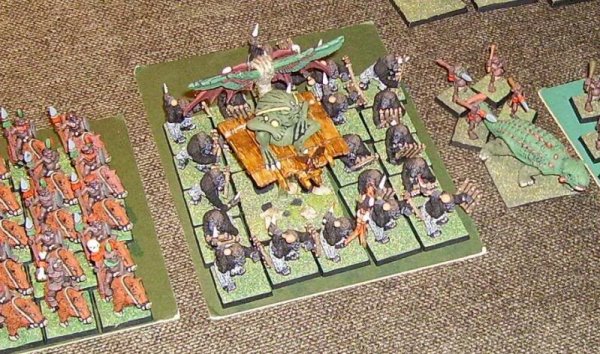
It was the greatest god of all, the mighty father Doh-Oda-Toh, floating magically and majestically above the ground on a platform of Goflainga wood, framed by a standard fashioned from two monstrous pairs of wings and guarded by his fabled Gorilla Guard. Every warrior felt paralysed, as if curare had entered their blood, for only the very oldest amongst them had ever seen the high god himself. Now the entire fighting strength of the Inni-ano tribe understood just how important this day was - the war they rumours told of was real, and perhaps even news of the death of Ta-Dino-Po’s siblings was true. Only such calamitous events could require the personal attention of Doh-Oda-Toh.
The Gorilla Guard, so rare a sight as to have made the youngest warriors doubt their very existence, were divided into two cohorts, one before and one behind the god’s platform. Their weapons’ cutting edges were made not of flint, but of viciously sharp teeth dug out of the mouths of ancient swamp monsters that had long since ceased to live in the world. Their shields were more humble, yet even they were studded with the hardened bone of legendary animals.
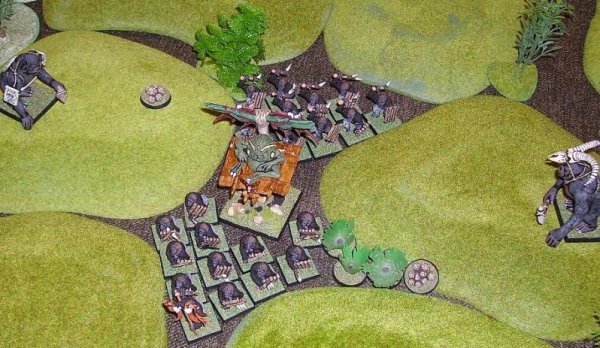
Doh-Oda-Toh’s platform was adorned at its front by a solid gold dragon statue, which although the size of a pygmy was dwarfed by the bulk of the god himself. His battle standard, the design of which had been carved into rocks by the entrances to nearly every pygmy village in the realm, was made of the wings of a giant parrot (considered the god of most jungle birds) and those of a now extinct species of terradon. Of course it made sense that a flying platform would sport such decorations.
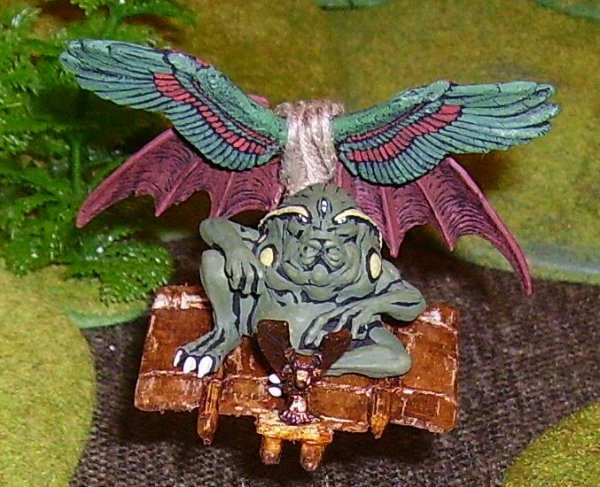
Doh-Oda-Toh looked upon his worshippers with all three of his eyes. None amongst the pygmies could know if he was pleased or not, but his spawn, the larval slann Tadinopo, could see that he was momentarily satisfied.
Hopefully, thought Tadinopo, the other tribes would put up just as good a showing. And hopefully the resultant army would be sufficient to the task ahead.
Battle to follow
Prologue
Living Gods
The living god Ta-Dino-Po, last surviving spawn of the mighty father god Doh-Oda-Toh (though many pygmy tribes had yet to learn this was so), had commanded every warrior of the Inni-ano tribe to assemble. The gathering was to take place at a sacred site of the ancient sibling gods Brobok and Besbak, which seemed an ominous choice to the Inni-ano’s chieftains and shamans, for never before had the living gods acknowledged the old pygmy gods. It had long been accepted by all the tribes that the living gods had driven the squabbling, immortal brothers into exile, and furthermore that Ta-Dino-Po, his siblings and his father were so filled with ‘here-and-now’ power that they had failed even to notice the old gods’ departure. The wisest shamans preached that the old gods had merely been dreamt by the living gods, a dream that had been forgotten upon awakening.
Of course that did not mean that the statues of the old gods had also disappeared, for they were very definitely not the stuff of dreams. They were made of stone, petrified wood and hardened volcanic ash-clay, and if the living gods wanted to chase them away too then they would have to use mighty magics or one of the Putoo Tribe’s stegadons to lift and shift them. Several of the pygmy tribes still harboured respect for the old gods, and secretly tucked away in recesses and even inside the (hollow) statues were the rotting remains of many a placatory offering. It seemed a very sensible precaution to keep both old and new gods, the dead and the living, happy!
There was something worrying the Inni-ano more than the strange choice of meeting place, and that was the terrifying rumour that Ta-Dino-Po’s siblings, the living gods Bo-Tana-Oon and Go-Akill-An, had been killed in battle. Such a claim seemed to make little sense, of course, for how could someone kill an immortal being? Yet a gnawing doubt ate at many in the tribe. Could there be some truth in the claim? The story was said to have come from gibbering Olobol warriors who had fled from a battle to the west. Of course every Inni-ano knew that you could not trust any Olobol, but this was a lie that even an Olobol would surely not dare to tell. To claim a god had died was blasphemy of the worst kind, which would inevitably curse the speaker of such words. Even the Olobol were not that foolish.
Not that anyone intended to question Ta-Dino-Po about the matter. The living gods were to be listened to and obeyed, not spoken to.
So it was that the tribe now stood waiting at Old Gods’ Gate - the entrance to the Sacred Gardens. They had allowed their gorillagors to stray into gardens, for it had long been accepted that the great beasts were gifted to the Inni-ano by the old gods, and as such they were probably permitted to eat of the fruit of the garden. The pets of the old gods eating the old gods’ food. Why not? The old gods were no longer there to eat it, and it would be a shame to waste it.
The rest of the tribe’s fighters, foot warriors and those mounted on pygmy boars, were arrayed in two cohorts upon either side of the gate.
Chieftain Ri-Ri-Kut stood before the gateway itself, flanked by his son, Ho-Ri-Gon and the tribe’s high shaman Pal-Lal-La-Ba-Ro. He was impressively dressed in his ceremonial garb, the skin of the first pygmy boar to leap the Oodle Gap and a green feather headdress. This was all much more imposing than his son’s loincloth and necklace of scarlet Dung Flowers. In accordance to the accepted ritual for occasions such as this, father and son held their weapons aloft, so that the shadows thus cast fell across their eyes. Pal-Lal hopped busily about from foot to foot as if the ground were burning the soles of his feet. Ri-Ri-Kut had no idea if that was the proper way for a shaman to comport himself at a time such as this, but considering the nature of shamans it was most likely that the proper way to behave right now was improperly, and Pal-Lal was even more contrary than most of his kind.
Suddenly, moving with a fleetness and grace the pygmies could only wonder at, Ta-Dino-Po arrived before them. He wore head and chest-adornments that glinted in the sunlight, and his green flesh (all the new gods were green) shined as if Ta-Dino-Po had only just emerged from water. Perhaps he had? Chief Ri-Ri-Kut waggled his bone-shafted, stone axe about in greeting, and was watched by the unblinking deity.
After a few moments, and just as his arm was beginning to ache, the chief decided that was enough and ceased his efforts. Trying to look humble and subservient, he studied his master for a clue as to what he was to do next. Usually this would be to listen, but the living god did not seem to be in the mood for talking. Then it occurred to Ri-Ri-Kut that Ta-Dino-Po was not looking at him, but behind him - staring at something in the Sacred Garden perhaps? Realising the gorillagors had simultaneously fallen silent, the chief experienced a surge of nervous anticipation and slowly turned around to see what had caught the god’s and monstrous gorillas’ attention. Every other Inni-ano warrior did the same, until the whole tribe was looking at a new arrival in the garden of the gods.
It was the greatest god of all, the mighty father Doh-Oda-Toh, floating magically and majestically above the ground on a platform of Goflainga wood, framed by a standard fashioned from two monstrous pairs of wings and guarded by his fabled Gorilla Guard. Every warrior felt paralysed, as if curare had entered their blood, for only the very oldest amongst them had ever seen the high god himself. Now the entire fighting strength of the Inni-ano tribe understood just how important this day was - the war they rumours told of was real, and perhaps even news of the death of Ta-Dino-Po’s siblings was true. Only such calamitous events could require the personal attention of Doh-Oda-Toh.
The Gorilla Guard, so rare a sight as to have made the youngest warriors doubt their very existence, were divided into two cohorts, one before and one behind the god’s platform. Their weapons’ cutting edges were made not of flint, but of viciously sharp teeth dug out of the mouths of ancient swamp monsters that had long since ceased to live in the world. Their shields were more humble, yet even they were studded with the hardened bone of legendary animals.
Doh-Oda-Toh’s platform was adorned at its front by a solid gold dragon statue, which although the size of a pygmy was dwarfed by the bulk of the god himself. His battle standard, the design of which had been carved into rocks by the entrances to nearly every pygmy village in the realm, was made of the wings of a giant parrot (considered the god of most jungle birds) and those of a now extinct species of terradon. Of course it made sense that a flying platform would sport such decorations.
Doh-Oda-Toh looked upon his worshippers with all three of his eyes. None amongst the pygmies could know if he was pleased or not, but his spawn, the larval slann Tadinopo, could see that he was momentarily satisfied.
Hopefully, thought Tadinopo, the other tribes would put up just as good a showing. And hopefully the resultant army would be sufficient to the task ahead.
Battle to follow