
• The forum software have been upgraded to the latest version.

    If you notice anything that looks off, or does not work, please let us know.

    For more information, click here.

It's not easy being green (bring your green stuff woes here) TEETH

@Rikard thanks for that explanation, it answered some questions i was about to ask about tools.

About applying very small or thin pieces of green stuff (maybe if need to make a surface thicker), is it able to stick and hold by itself?
How well does green stuff stick to a smooth plastic surface(eg. Adding spikes to Bastiladon scales)? Do I need wire to reinforce the joint or make cuts to make the surfaces rougher?
 
@Rikard
About applying very small or thin pieces of green stuff (maybe if need to make a surface thicker), is it able to stick and hold by itself?
How well does green stuff stick to a smooth plastic surface(eg. Adding spikes to Bastiladon scales)? Do I need wire to reinforce the joint or make cuts to make the surfaces rougher?

Nope, have a look in the sticky in the Lizardman discussion area, I did a stage by stage scale resculpt on the Bastiladon, no bits of wire used anywhere in it.
 
Just a couple of little FYIs.

First off keep the questions coming. Second, for more complex and lengthy questions, I'll put some tuts together.
Third, I've been making progress on the salamander, shouldn't be too long before I have some photos to show. :)
 
Alrighty then!

Smallish update to stick in here (been looking through my photobucket account and found some older mini tuts I did ages ago, which should help here and there).

It's an old one, but it may help a tad, the first shows the importance of doing things in stages (like frequent saving in a computer game).
The second is an example of stages with something (hands in this case) where you need the putty to remain uncured.

It's also worth noting at this point that your number one goal with sculpting is this:
- Always think and ask yourself on how you can make things EASIER (or, work smarter, not harder), the easier you make things for yourself:

Things like:
  • Stages.
  • Using less putty than you think you need.
  • Finding concept artwork.
  • Spending more time on your armature.
  • Researching the anatomy for the pose.
  • Using different materials for different parts.
Obviously that's not all the things involved, there's more (though can't think of them all off the top of my head), but as I said, keep thinking, keep asking.

How can I make things easier?

http://smg.photobucket.com/user/N-large/media/Working_on_a_test_piece_at_the_by_T.jpg.html
http://smg.photobucket.com/user/N-large/media/Sculpting_Hands_by_Thebuild.jpg.html
 
Small FYI.

Coming soon, some info on feet, as I think I've come across a new and interesting way of doing Lizard feet.
I'll also have a rummage round on my old accounts/computer folders and see what else I've got tucked away.


Also, smaller note here, but is this topic worth pinning, or is the existence of the other one I've done in the Lizardman discussion section, more than enough?
 
So, in the past I've had a lot of frustrations sculpting membranous shapes. Think wings (bat-like or feathered), or Skink crests are another good example. My various solutions include sculpting the shape onto blu-tac, or making a thin, rough core to sculpt a smoother finish onto (if that makes any sense). Still, I feel there must be a better method.
How would you go about this?
 
So, in the past I've had a lot of frustrations sculpting membranous shapes. Think wings (bat-like or feathered), or Skink crests are another good example. My various solutions include sculpting the shape onto blu-tac, or making a thin, rough core to sculpt a smoother finish onto (if that makes any sense). Still, I feel there must be a better method.
How would you go about this?

I quite like using metal mesh, it can easily be made quite strong (razordon sail).
I would recommend getting it shaped first according to how you want it to look and then use something strong and light like milliput. Really spread it around the the mesh and as thinly as it will go (before letting it dry).

It should be more than suitable for larger things like wings.

For crests (because they're smaller) I'd use thin lengths of wire cut to shape and placed into the skull/head.
Once hardened I'd then apply the green stuff over the wire with your fingers (doesn't matter if it's sticky and you get finger prints all over it). I'd then use some clay shapers to push the putty around (and more importantly from both sides) to create wavey patterns.


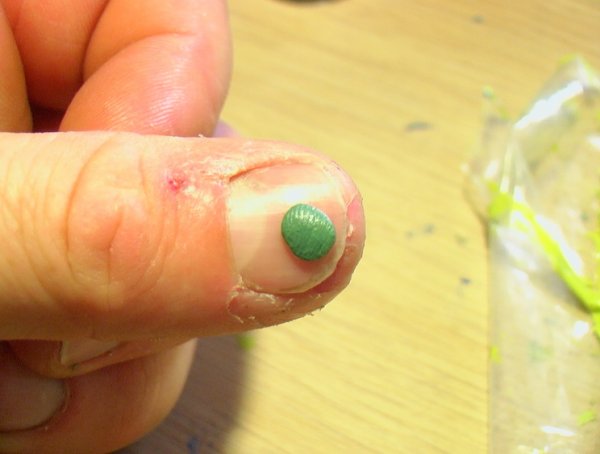
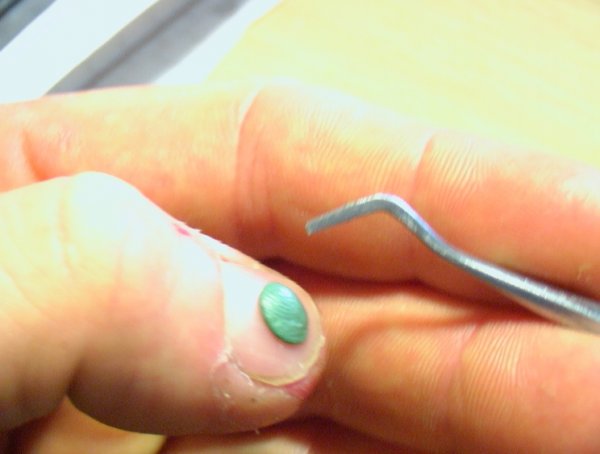
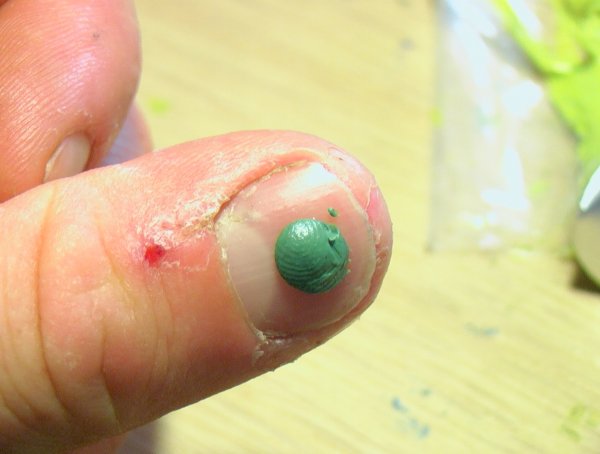
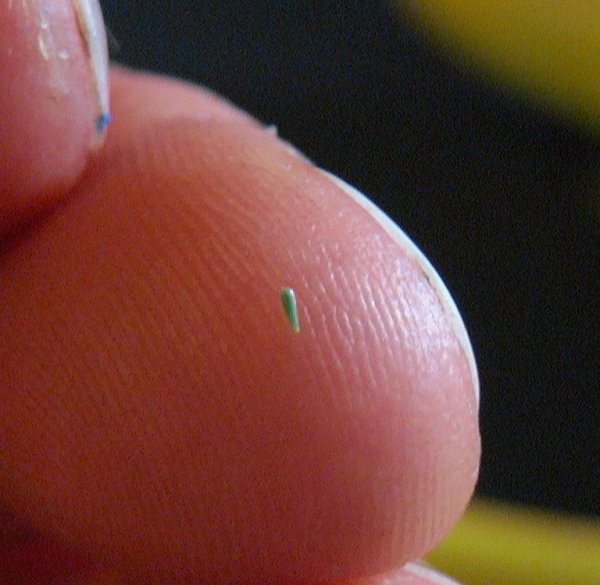
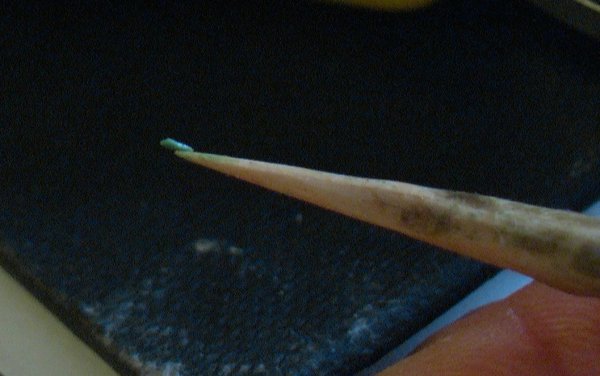
Small tut on teeth:

1. I mix up green stuff and place it on my thumbnail.
2. I then use a metal tool to pull a small amount off the main blob.
3. Photo of tooth pulled off from the main ball.
4. Roll quickly between two fingers.
5. Wooden tool (that I made), touch the tooth and it sticks on the end, then simply slide it into the mouth, quick, simple and easy.
 

Attachments

  • AUT_2156.JPG
    AUT_2156.JPG
    176.3 KB · Views: 17
  • AUT_2157.JPG
    AUT_2157.JPG
    167.2 KB · Views: 17
  • AUT_2158.JPG
    AUT_2158.JPG
    670.4 KB · Views: 18
  • AUT_2159.JPG
    AUT_2159.JPG
    230.7 KB · Views: 17
  • AUT_2160.JPG
    AUT_2160.JPG
    298.2 KB · Views: 17
So I'm planing on a conversion with metal implants and was wondering how you would do scar tissue around and sort of growing over said metal
 
So I'm planing on a conversion with metal implants and was wondering how you would do scar tissue around and sort of growing over said metal

I'd put a blob of GS on the area, make a small hole by poking into it (making sure the hole is slightly wider than the metal tube/implant).
- Next you push the putty all the way around towards the tube/implant, but leave a tiny gap all the way around.
- Next push the other green stuff away from the implant, you want to make sure it's as flat as possible and blends seamlessly with the model/area you've stuck it on.
- You can add very fine lines/cuts to represent scars, but be careful, it's one of these "less is more" cases where it's far too easy to go overboard.
 
I saw on your other post that you were converting a cold one into a horned one I would like to do something simler but with a skink riding it any tips would be helpfull as the only times i use green stuff is to block up gaps so i am pretty new to the world of green stuff. thanks
TheMagePriestOfZlatlan
 
I saw on your other post that you were converting a cold one into a horned one I would like to do something simler but with a skink riding it any tips would be helpfull as the only times i use green stuff is to block up gaps so i am pretty new to the world of green stuff. thanks
TheMagePriestOfZlatlan

Yes, plenty,

First off, I'd er on the side of caution and remember the saying "Work smarter not harder".
By that I mean, (assuming you don't already have a specific skink model in mind" pick one with legs a reasonable distance apart, it will require less work to convert (one of the terradon riders would be favourite).

Next, I would actually convert/build a saddle for him on top of the cold one and make sure it's the correct distance for his legs to sit comfortably.


If you can avoid having to cut and COMPLETELY re-sculpt the sculpt the legs on the skink, it will save you time and be much easier, you also do not have the worry that comes from cutting up a good model and then having to try and match (to YOUR satisfaction) the new sculpted parts with the pre-existing ones.


Remember...baby steps, break down projects and goals into smaller parts so they're easier to tackle and you can focus on each stage as you come to it, rather than on the final piece.
 
Great thread about the tools and techniques of modelling, thanks!
 
This is an amazing thread, need to pick up some metal mesh for a bastiladon, was wondering how I was going to make that work, now I have the answer.
 
Back
Top