• The forum software have been upgraded to the latest version.

    If you notice anything that looks off, or does not work, please let us know.

    For more information, click here.

Tutorial Spawning of Bob - Safety with Pencils

Scar-Veteran

spawning of Bob

Well-Known Member
Messages
2,911
Likes Received
5,630
Trophy Points
113
Disclaimer: As an artist, Bob makes a very good...artist?

Perhaps it would be truer to say that SoB art is somewhat niche.

Anyway, there have been sporadic requests for technical assistance, and there is a burgeoning LO art movement. I've trial and errorred a number of things over the last 4 years of cartooning, so here is a bit of a distillation which may (or may not) help if you want to get the pencils scratching.

There are a number of sections to this, which I will probably tackle in an unhelpful order. And I will discover more stuff to talk about as I go.

History
Bob's Theory of Design Philosophy
Technical Aspects (layers, scaling, shading, composition, software, hardware, other stuff)
Step by step sketch
Bob's theory of Single Frame Comic Humour
Adding some realism
Spin off benefits
 
Scalenex's theory of listing features: Don't make the list till you have actual posted content for about half of the list.
 
Scalenex's theory of listing features: Don't make the list till you have actual posted content for about half of the list.

Bob's theory of replying to threads: don't reply until there is some content to reply to. ☺


History.
vincentcb-jpg.8403


The Dawn of Time.
Way back, when when my kids were about 6 and 8, the thing I did to stop them from tearing down restaurants while we were waiting for food was draw with them. This progressed from, "look at the silly dog" to "look at the subtle parody" in December 2010, when over the course of a few weeks we did a series of pictures of Reindeer who had been twisted by dreadful puns. Plane deer (with wings), Insane deer (boggly eyes), Cane Deer (with blind cane and black glasses. Perhaps a pre-incarnation version of Blinqi?) and Pain Deer (hits thumb with hammer). If I was doing it now there would be Khaine Deer (with bloody hands) and Slain Deer (probably feathered with poison darts. Death to the filthy beastmen!)

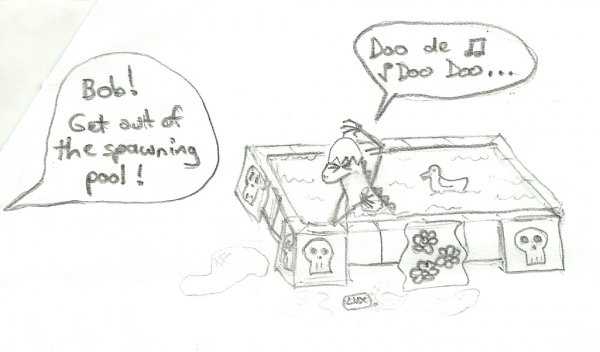
The Spawning of Bob
December 2010 was also the time that LM became a thing. LM began appearing in Australustrian restaurants. Two things happened as a result of this image.
128858-15854-b4e8041dcbf8ad53d7ff4c19703043f8.jpg

The lesser of the two happened three months later, when I decided join this very forum and thought I would put some images with my introduction post. I needed a user name, and the choice was obvious. Unfortunately, "Scalenex"* was already taken, so I became "spawning of Bob". After that I posted an eponymous thread on Fluff. You will notice that I had technical help and encouragement from legendary members such as @n810, @Arli, strewart and T`hinker`er from the very outset. Look what you have unleashed! What were you thinking?

The most important thing that happened with the spawning comic was the eggshell. One single recognisable feature. It meant I had a recurring character, which meant that I could assign personality traits, put him in different situations and that he could potentially develop and grow in front of an audience. The fact that he has not actually developed in the intervening 4 years is merely a function of the fact that he was spawned perfect in every way.

*No it wasn't. I joined first. By 3 days.


The Dark Times
BY the end of 2011 I had published a number of random comic collections, had more WIPs and had written the guts of the probability essay. Then I just stopped posting (life and health reasons)

The Bobnaissance
The entire reason for me starting to post again in early was 2013 was that the Lance Armstrong Joke would soon stop being funny. I re-used or created 13 other comics as a vehicle to propel one lame pun. That's how I roll.

Once again I got an encouraging audience, and I got to actually do something useful with pulling in the threads of the L-O dice design. The other thing about 2013 was the sudden interest and urgency on the forum prior to the 8th edition LM army book release. Wild mass speculation and paranoia gave me much fuel for parody, but the terror of all of my undeveloped ideas being suddenly tossed out the window gave me a sense of urgency. It reminds me of... now.

Writers Cramp
There were a number of good things happening on the Fluff forum around late 2013, chief among them being Scalenex's collection of novellas. My initial reading of them was "no way - these lizards are just too human and relateable". I quickly came to learn that you need relateable characters to write engaging fiction, but I also learnt that the author can present his characters any-the-heck way he wants. There are no rules. I decided that my cartoon characters could tell a story, so I dipped my toe in the water. With a full length novel.

That wasn't my plan. I wanted to do a "1940s Saturday Morning Serial" style approach (as George Lucas's had used in Episode 4 - A New Hope). There were going to be semi regular instalments of linked, but quite complete story units. I chose to use a combination of road movie and quest plotlines because I knew those genres were never hurt by being completely aimless - as long as the rules of cool or funny prevailed.

Next time I get into the writers thread (Writers' Wretreat or Crytics' Crypt?) I will try to explain why it was legitimate to use 9000+ words in order to justify recycling just ONE out of context comic as an illustration. Which I must have done about 6 times.

Anyway, aimless gave way to actual plot ideas, and I had to do frequent revisions of the first few chapters. While this was WIP, not a lot of comic series were produced, but I kept the pencil sharp doing story illustrations and mocking my dear cold blooded fellows in Spawning of Bob and Friends.


 
Last edited:
Step By Step Sketch Part 1

Massive Spoiler Alert for a mysterious someone who will soon be "friended". Bonus points if anyone guesses that individual's identity before I make it stupidly obvious.

The following example attempts to put all of the creative steps in some sort of order, but in fact a lot goes on simultaneously, and a lot happens in the mind not on paper, and there is a LOT of erasing that goes on even during a single step. I have chosen to use a (very) cheap android tablet as my main tool here, but virtually all of the work can be done with paper, a soft (I like 5B) pencil and and eraser. I personally don't save any time by using technology, but I have more control over the finished product.

I'll use spoiler tabs for useful extra facts which would clutter up the explanation


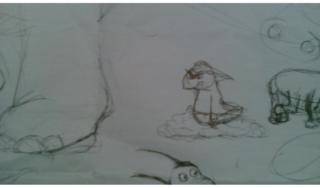
Step 1 (maybe twenty minutes spread across all the dull moments at work) - rough sketches. (in this case pen on paper with very light lines initially, then heavier on the lines that I wanted to keep)
I had an idea for a situation to put a character in.
I did a rough concept drawing () to get the rough mood and pose right (that's him with no legs)
128862-Y5079Q.png

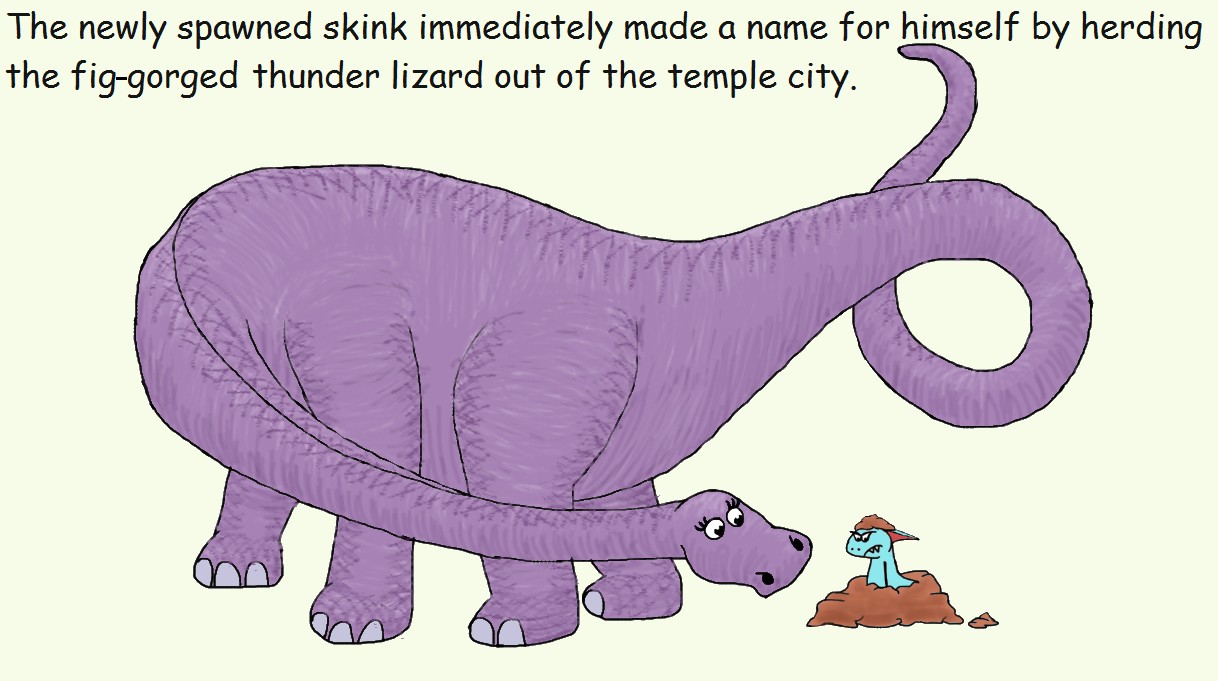
It would have been funny just like that (with the right dialogue to go with it), but I asked myself, "how did he get into this situation?" and then decided I needed a thunder lizard to make it even funnier (stegadon wasn't big enough)
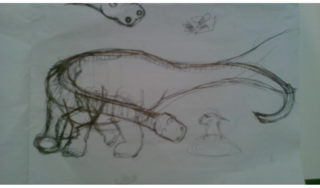
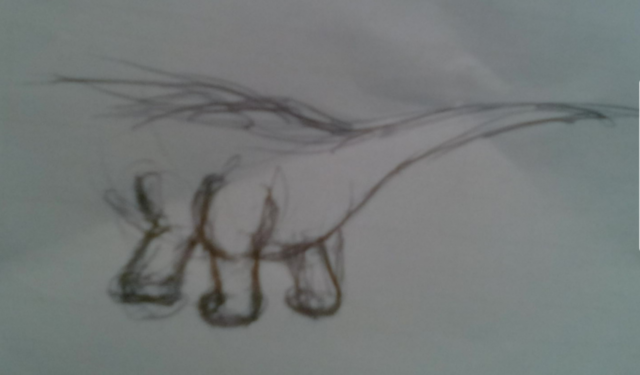
I drew a couple of thunder lizards until I settled on a pose. Notice that it has too many legs. I find pen and paper is the best place for me to lightly draw in appendages. Getting the balance and sense of movement requires a lot of trial and error for me. Extra legs get deleted later.
128862-ipsnZz.png

My characters have now got a pretty firm style. A SoB skink has followed the same set of design rules since March 2013. The only previous one I had posted seems really weird now. SoB thunder lizards also have their precedents in the same thread .I want to retain the gentle feeling of the original TL, but the plan requires a long neck. Hello evolution.
I photographed the sketches with my tablet. (You can scan them instead)
If you were going pencil and paper to finished product, now is the time to erase sketching lines and extra legs and do the outlines more heavily before scanning. If you are going for greater depth or realism, then you can shade or colour on paper first. The next several steps below can all be done on paper, but I did them on the tablet so I could capture each stage clearly.
 
Lizardmen haven't invented the wheel yet. How do you possibly have a tablet?!?!

Also, cool origin story bruh.
 
How do you possibly have a tablet?!?!

What were the glyphs showing the Old One's instructions carved on? Duh.


Step By Step Sketch Part 2


Step 2 - solid shapes.
A proper tutorial would tell you about several techniques for getting some depth in an image. You came to the wrong post, pal.

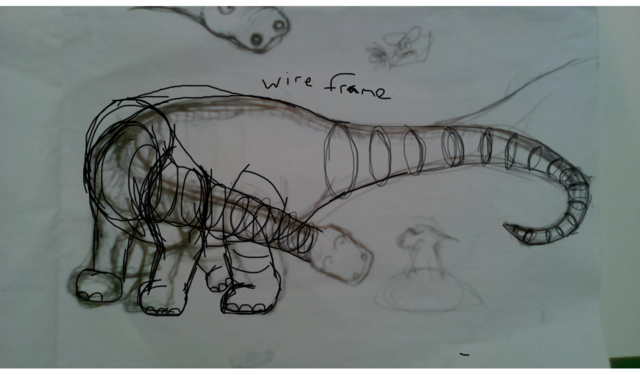
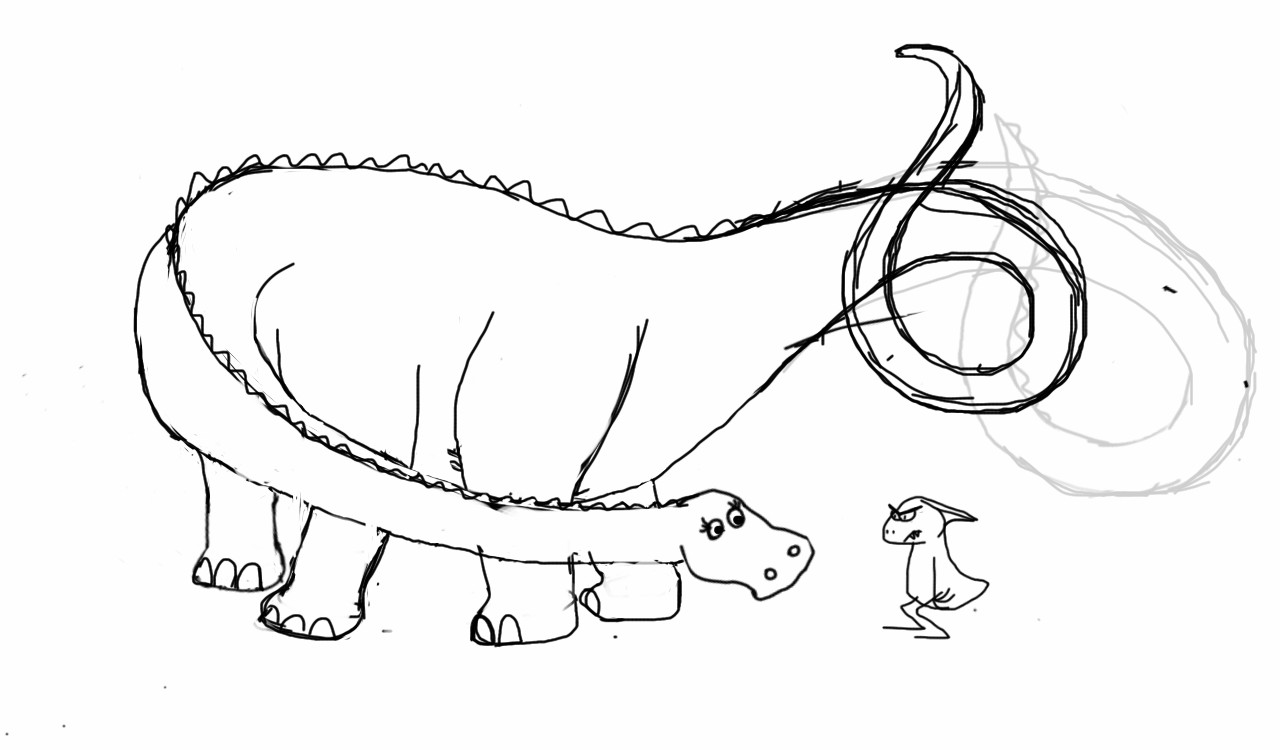
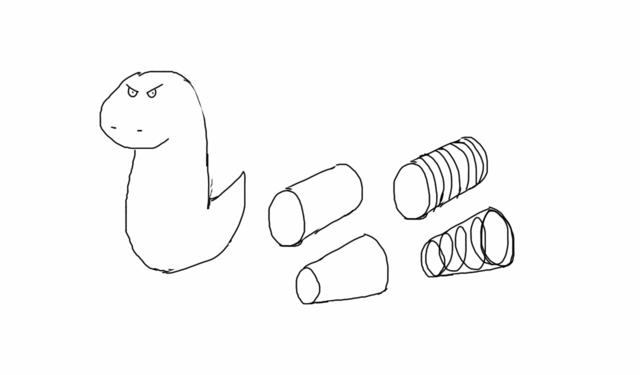
The sketch above has some faint lines on the TL's neck. I did a very quick spiral as a wire frame. I'll redo that process in this sketch deconstruction, but it is a little hard to explain here. The details are in: Technical Aspects 3 - Wire Frames

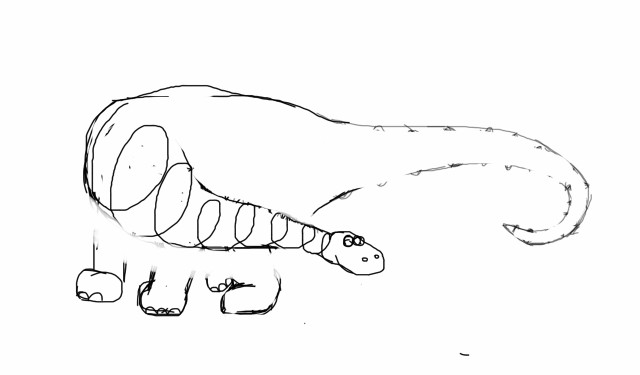
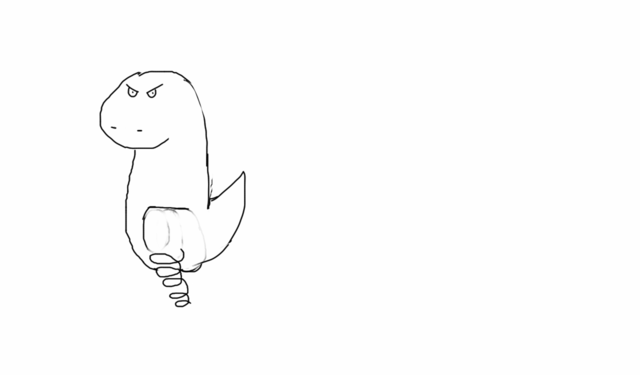
A three dimensional creature can be cut into slices (but watch out for the SPCA). The reverse is true - a series of cross sections can be used to build up a 3D creature or parts thereof. The tail below shows a bunch of circular cross sections.

128969-3kV2E1.png


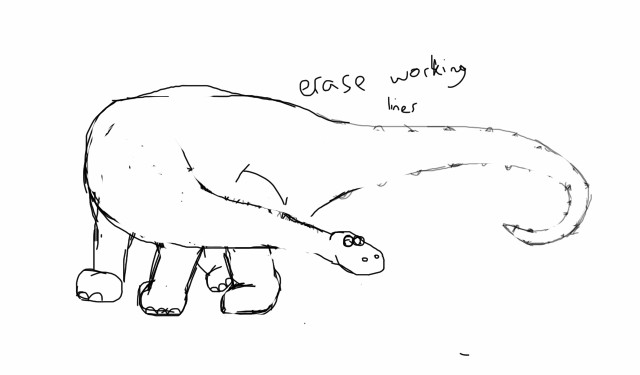
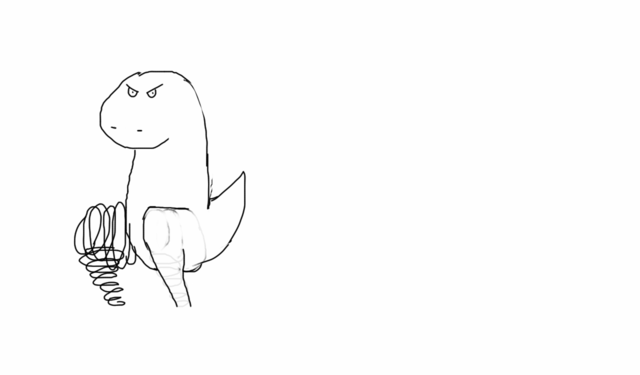
The neck is a mess, but it is several overlapping spirals super imposed on the legs. I will erase some working lines and simplify.

128969-NZsGlG.png


The wireframe for the neck is a spiral - like a stretched out spring. Cuts and spirals work well for vaguely conical and cylindrical shapes. They are not a necessary step, but if you get into texture and shading later they become VERY useful.

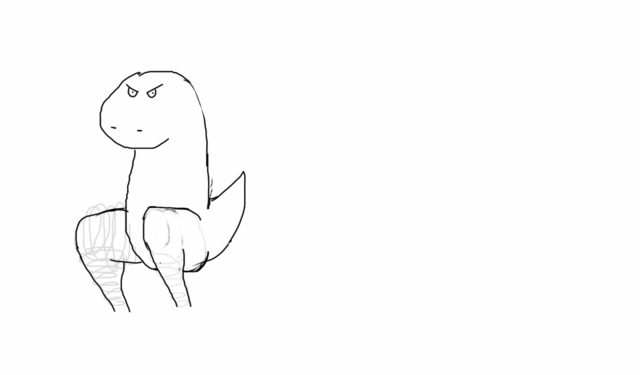
Anyhoo, I deleted the wire frame again and lined in the best set of legs.

128969-oz4OSv.png


I then stood back and thought about the position of the body and head and where I would place my friend and I decided that I couldn't make it work. I needed him behind the body and level with the TL's nose. Back to the drawing board (literally) where I had already drawn another partial sketch. All this work wasn't a waste of time because I had got a feel for the design of a thunder lizard and the next few steps would have been a snap if I hadn't had to demonstrate another concept.

Sketch
128969-BtPXrp.png


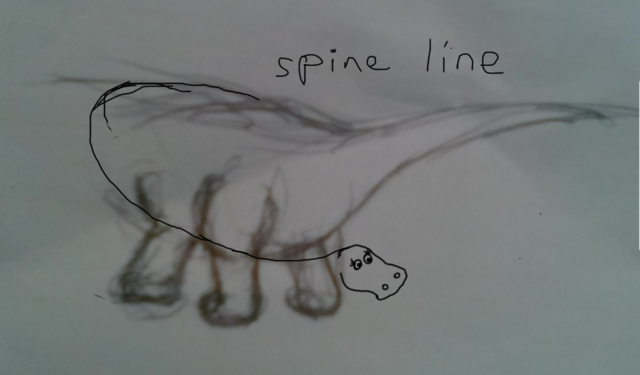
Spine line. The neck and tail are just fat lines, really. I can map them with a single line and thicken it later. The important part about this line is that it shows which bit of the body part is the centre. I'll show you why it sometimes matters in a moment.
128969-VEgiRJ.png


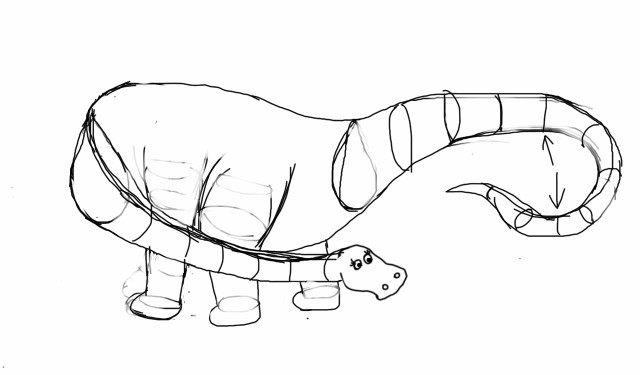
Wire frame. I want the tail to be a circular cross section. The neck I will make tear drop shaped. (Feel the neck of a horse - the centre is very narrow and high). I get the shape of the outer side of the base of the neck from my wire frame, and the point where the inner side disappears behind the sticking up spine. While I was on that image, I extended the front left leg to level the ground. I am far from happy with the leg shape, but I will get back to it eventually.
128969-AUqF4S.png

The two arrows point to places where the tail is briefly running parallel to the viewer (the top arrow pointing to the inside of the loop, the bottom one to the outside as the tail curls towards you).

128969-JWuDC6.png

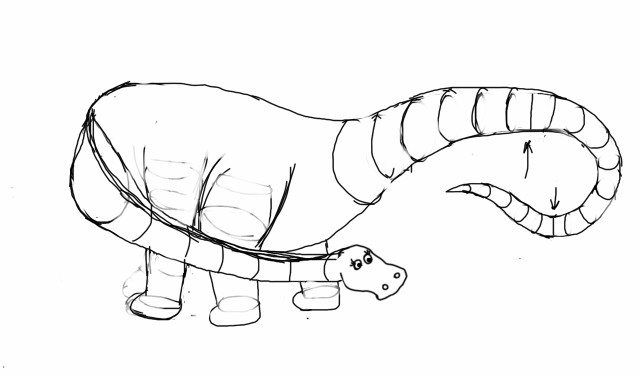
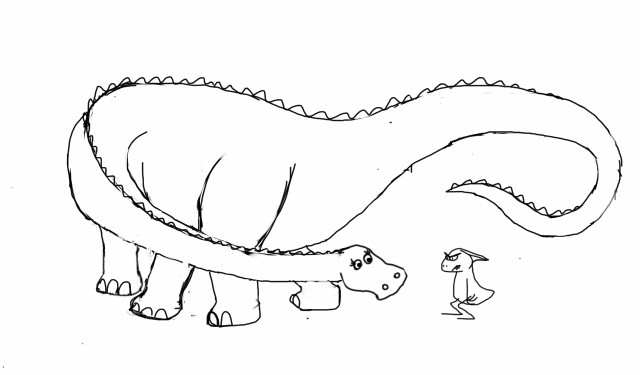
This time I have attempted to fool your eye into seeing the tail curve away from you. The top arrow is where it bulges towards you, the bottom one is at the furthest point. I am not convinced that I have fooled anyone, but I can use my spine line and put some spikes on it to put it all beyond doubt - the tail goes back.

128969-ZuuGUC.png

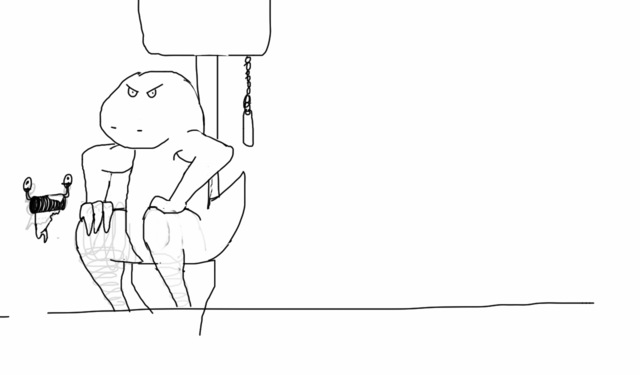
I've added another leg and positioned my friend, just to give a sense of completion. Yawn. Goodnight.
 
Last edited:
Still here?

Technical Aspects 1 - Compositing several image elements

Let's just imagine that I had done all of the above with pencil and paper. It might be just about good enough that I could scan it and post it with a little bit extra effort erasing working lines and then lining in the "keeper" lines more heavily. But I notice a few things that bug me, and, no matter how well I erase, there are always shadows left by the working lines.

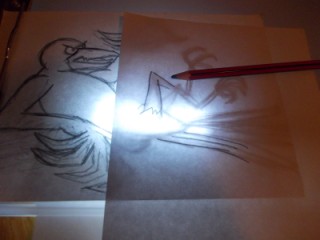
I could trace onto a new sheet which will eliminate the shadows and allow me to re position or re angle a few things. If I have a complex image with several elements, I can get their relative positions and angles right, too. As an example,
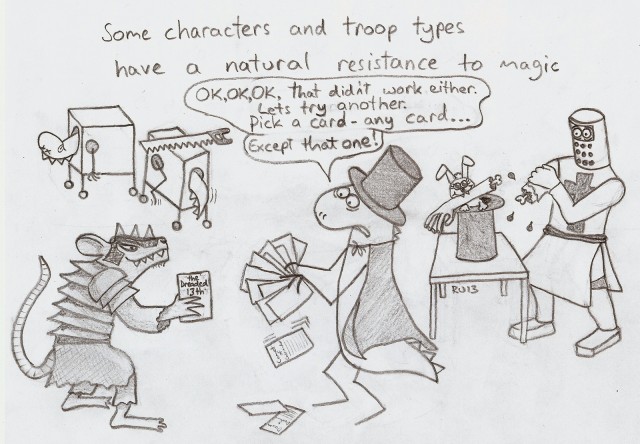
129126-us03cR.jpg

Bob, Joe (he is OK, by the way), rat, rabbit, and hat were all separate sketches traced onto one piece of paper. The only things that were done free hand on this sheet was the table, the text and the knight. You can see erasing lines where I drew his legs in (to get the pose before I covered him with his tabard).

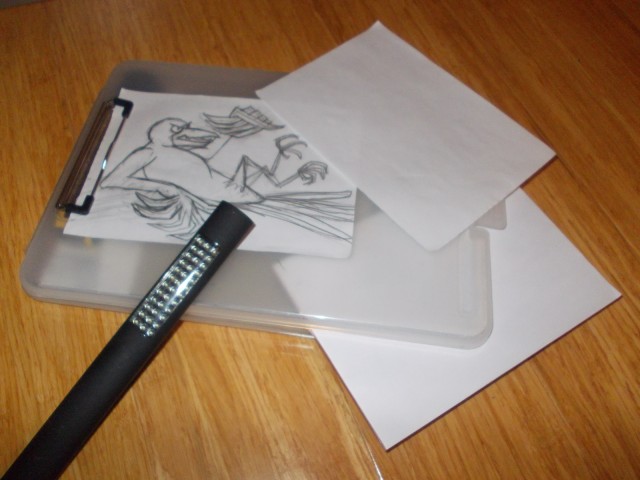
The product of me not having space to take my more elaborate setup with me when I went somewhere.
129126-zHpr6o.jpg

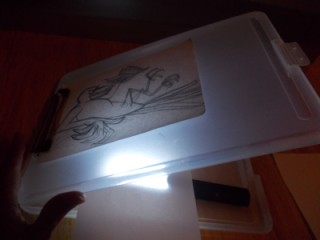
Components - opaque plastic boxy clipboard folder thingy - $5. 36 LED flashlight - $5. Paper and pencil - not much. Cameo by @lordkingcrow, priceless.
129126-TkXbdq.jpg
129126-WkZdvs.jpg

I put some extra paper above the light source as a poor man's diffuser. A sheet of fluorescent light diffuser would be excellent, now I come to think of it.

With the image traced to my satisfaction I previously would have scanned it into the computer, and opened it in MS paint. In paint I can touch up any obvious eraser lines, resize any separate components, add text and then crop to get the final image composition.

That was then. Now I have a cheap android tablet and sketching software (with multiple layers). There are only 3 things the tablet allows me to do that pencil and paper won't.
  • Rescaling (change the size of) components.
  • Keeping contrast. Scanning from paper to computer loses brightness or contrast or both. All my old stuff is on gray backgrounds because my compromise was to lose the brightness rather than the clarity. Proper image editing software would have allowed me to adjust for this, but I am as tight as a fish's bum.
  • Really easy colour filling.
The main thing that I have LOST by going from paper to tablet is fine control over texture and shading. All my new stuff is bright and pretty, but the refining and colouring process sucks all of the life out of a sketch.

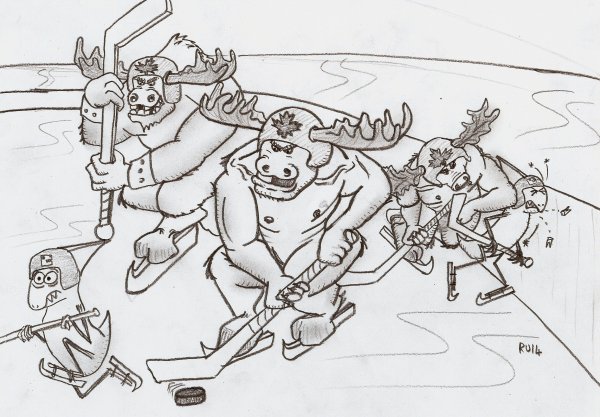
This is my best pencil and paper image.
129126-11745-d45f68fef2fabb0e2093b3439b20c0c8.jpg

You can see a number of techniques. 6 components (the edge of the rink included) were drawn separately then traced back onto one sheet. The front moose was drawn using an ice hockey player cartoon as reference, the next one was referenced from a minotaur with great weapon. The one behind was a SoB original. The faces were based on actual Canadians. You can see the ethereal third nipple which is either a mutation or an eraser shadow. The shading (which I will discuss another day) was soft pencil smudged with fingertip. I sometimes use the grubbiest eraser imaginable for shading larger areas. It lays down more graphite than it removes. I didn't do any touching up in the computer.

I could spend half an hour going over the edges in the tablet and then filling the figures with colour, but then it would look about as good as a pile of stegadon poo.

That was a long way of saying that I will be doing the scaling and compositing of my thunder lizard on the tablet but that I could have done it on paper, and it would probably be a nicer image if I did.
 
Last edited:
Technical Aspects 2 - Colour and shading

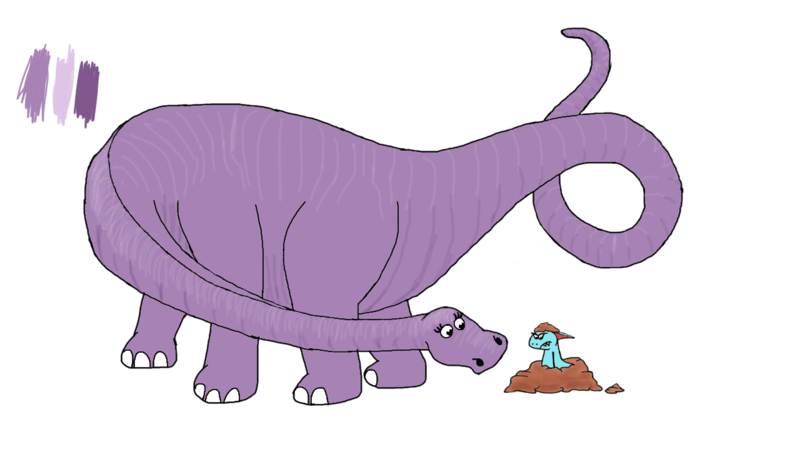
Back to the thunder lizard. This is the final rough pose.
129818-z74K6T.png


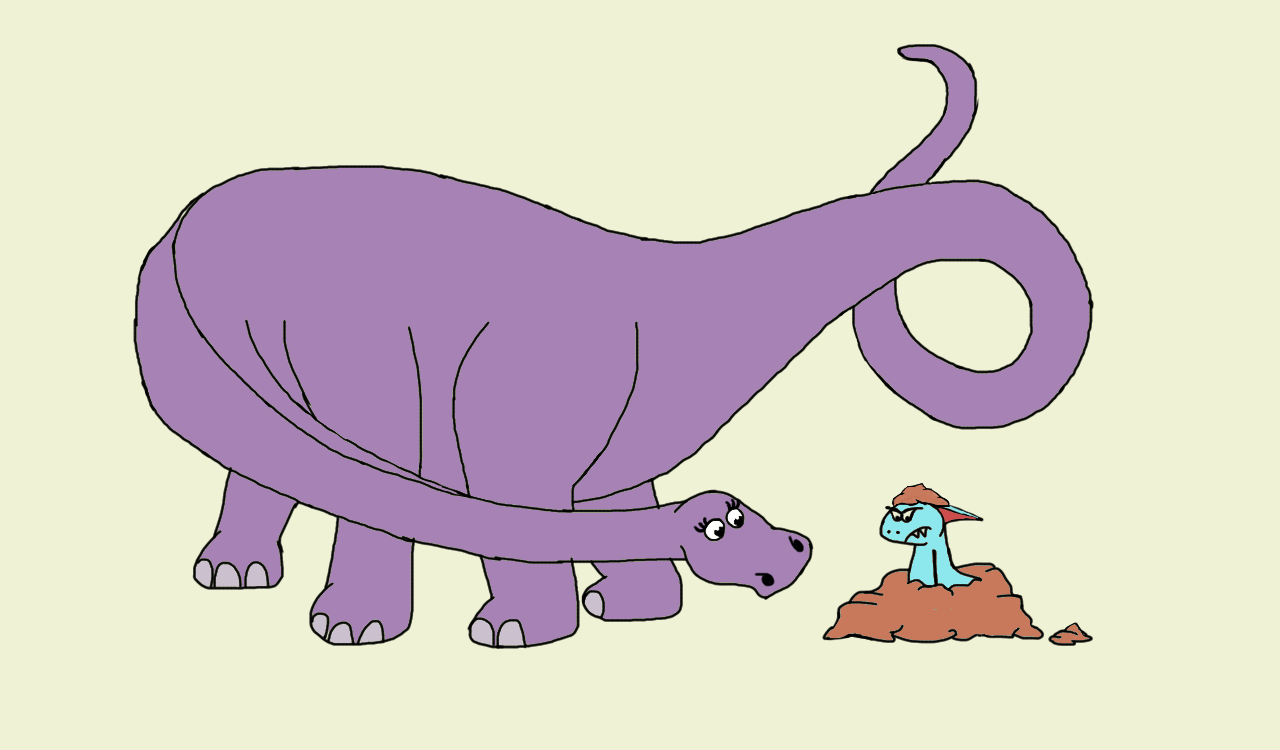
I made a new layer on the tablet, went over the lines and added colour. Leaving me one amusing line away from a New Bob and Friends cartoon.
129818-v4TTwW.png


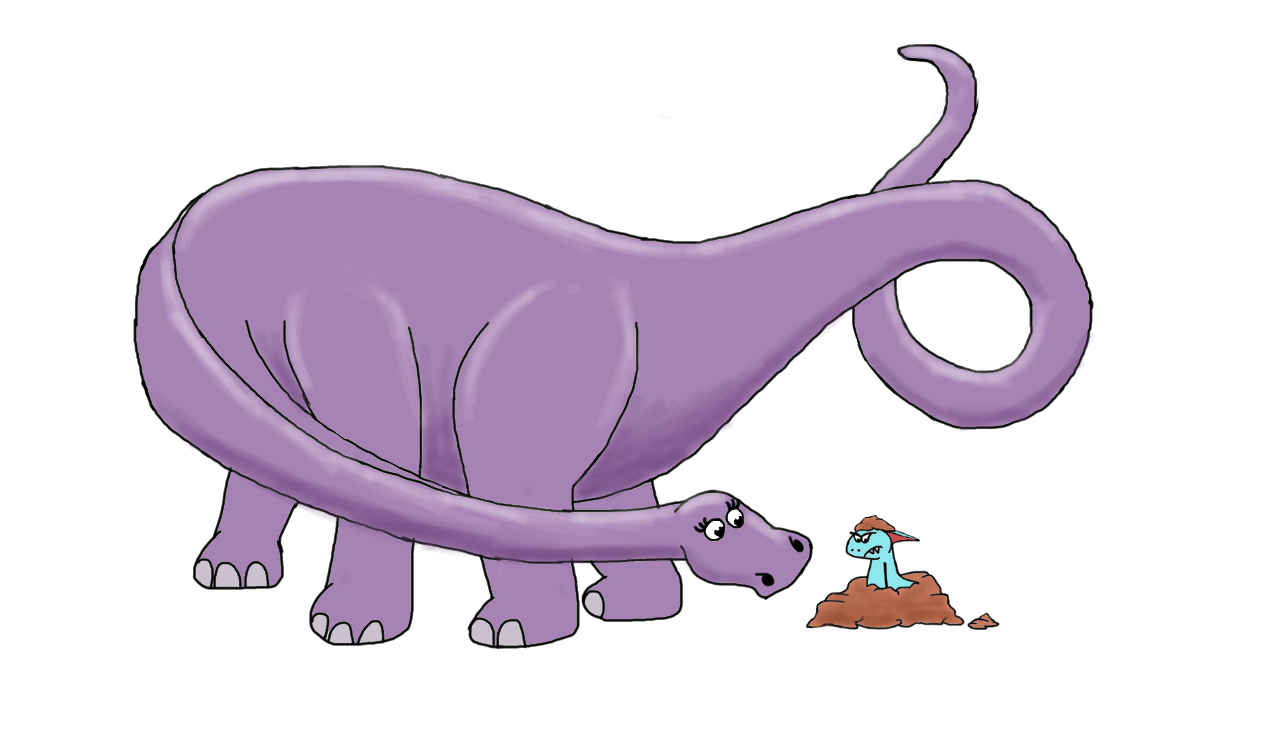
Finished Product? No! I am going to push the envelope a bit to see what I can do with shading on the tablet. (Don't raise your expectations too much) The easiest option is to reduce the opacity and go a few shades lighter, get a soft brush / airbrush and highlight the upper surfaces. Then repeat with a darker shade for the lower surfaces.
129818-zYGuhb.png

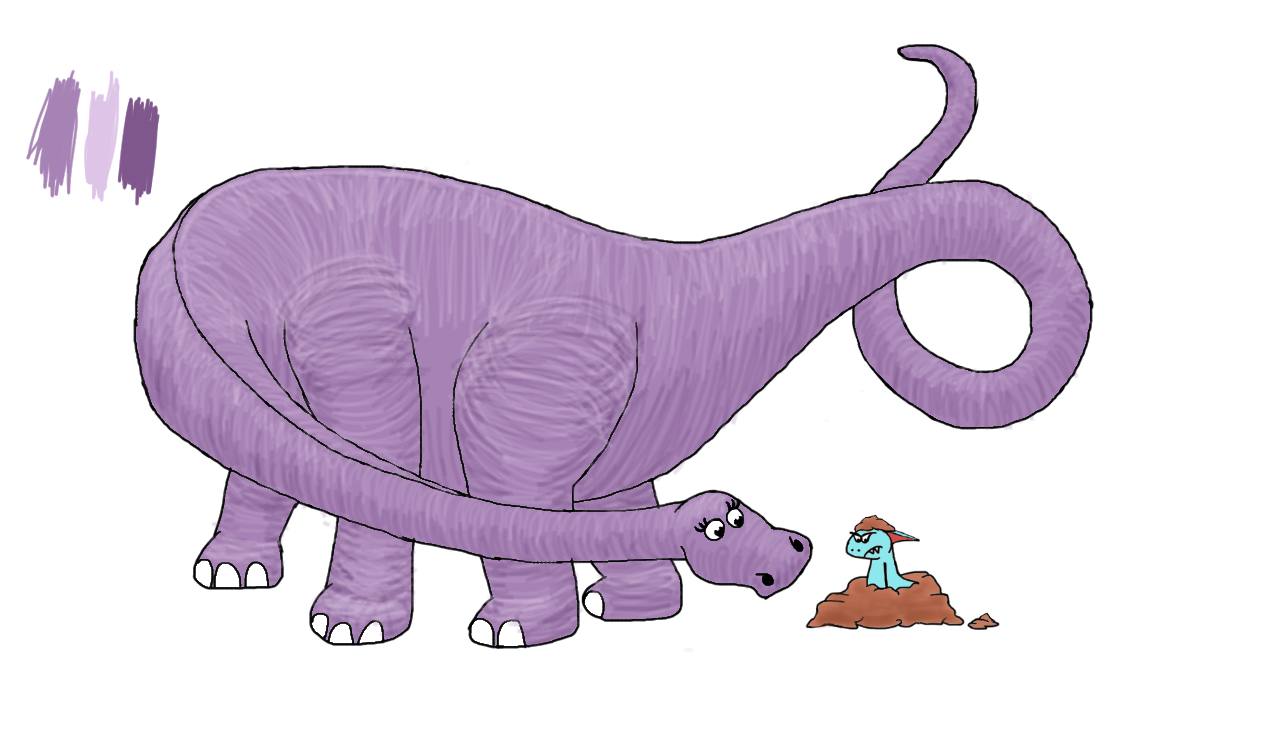
But why take the easiest option when there is a much harder one which illustrates another technique? I am going to use my cross section / coils to try and add more 3d effect. I use the same two darker and lighter tones (see my palette on the left) and a thinner brush to recreate the coil lines on the surface.
129818-ABdbX7.png

Having got a few guidelines in, I can just go to town. note that i am using the same concept to put coils around the legs and that they (legs and leg coils) run perpendicular to the body. What a mess I have got now!
129818-oOmRIU.png

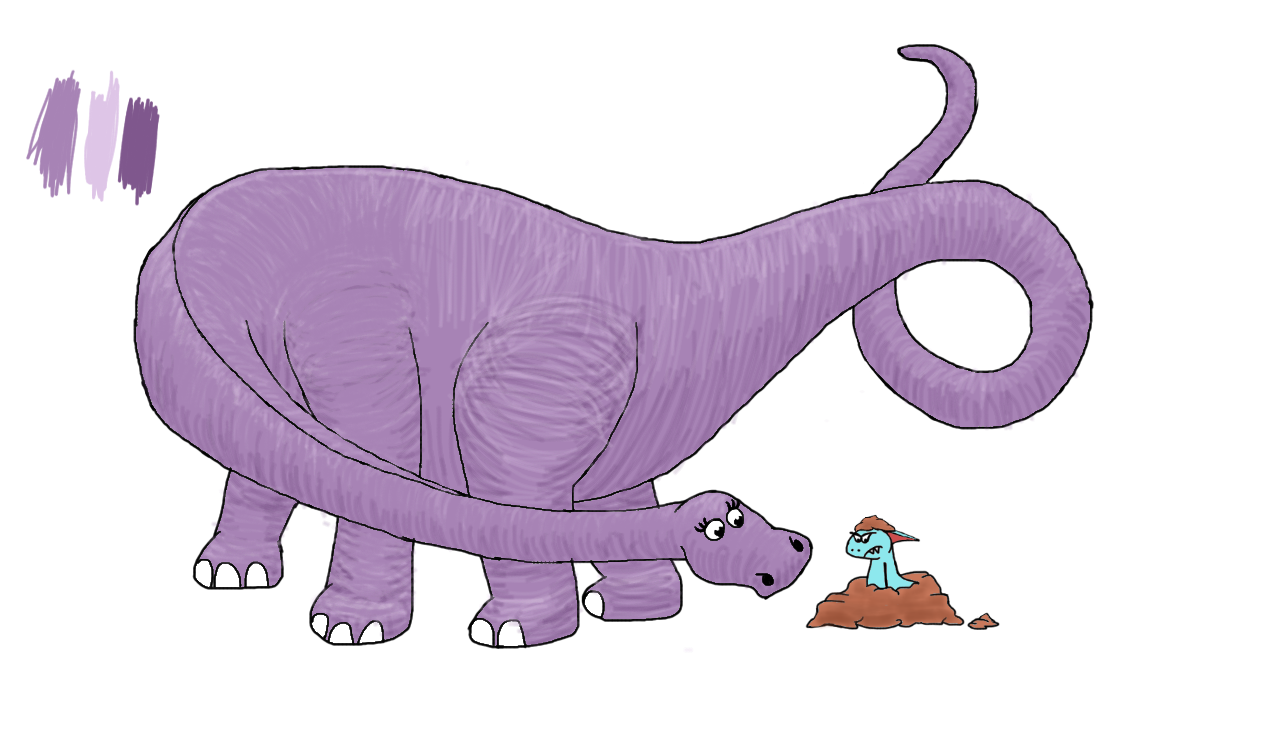
I came back with the original TL tone and smoothed out the transition from bright to dark in the centre os each body part - this is just the front half "toned down"
129818-XzQqJG.png


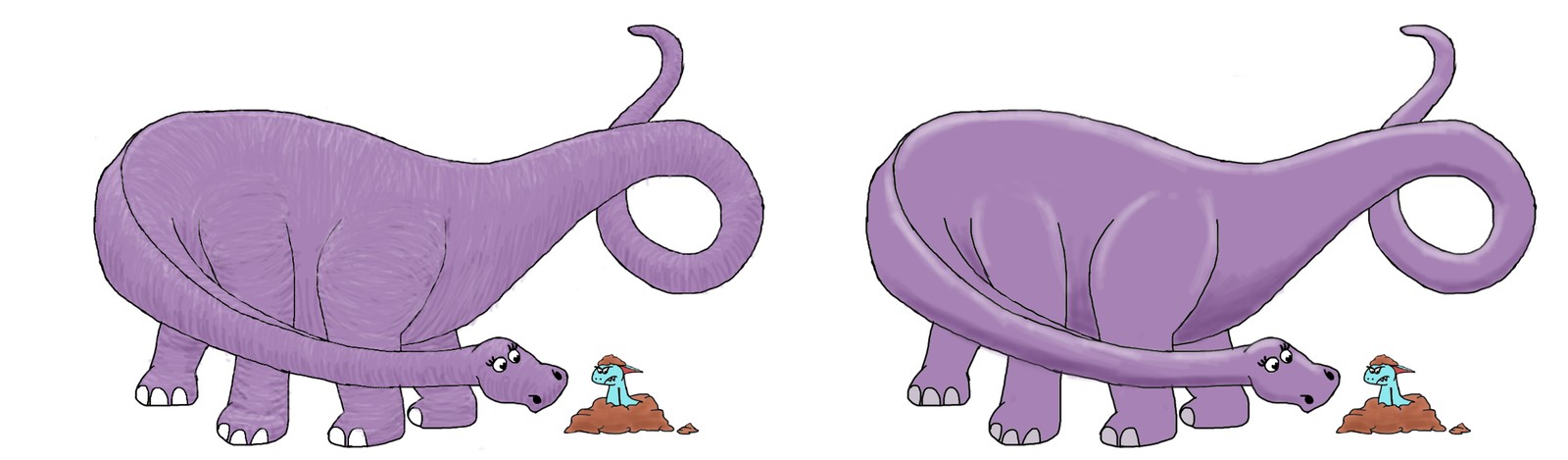
And now it is all smoothed back. Here it is side by side with the simple shading version. Which one has more "bulk"? Which do you prefer? I can't make up my mind, but the simple one was a lot faster.
129818-XygGQn.png


I wanted to try another technique, which was to add a scale texture. I used the very tops of the coil lines as my primary direction for the (scrawly pencil tool) lines, and then added an oblique line to make diamond shapes. One of our master painters uses a more detailed method on his miniatures. (@neveroddoreven, A Guide on Freehand Scale Textures)


With the hilarious / obscure line added, it becomes a Spawning of Bob and Friends Masterpiece!

129818-harEp2.png

129818-rVWWQ4.png

StinkySkinky, of course!
 
Last edited:
Did you like my use of curved surface lines to give depth and shading. I thought it was great, until @Qupakoco posted this image.

This is probably how it is meant to be done. (ie look at the tail - it is identical to mine!)
 
I thought you drew that!!

I do see the similarities in the drawings. The only real difference I would say is perhaps your art is produced considerably faster than something like that would take.
 
Technical Aspects 3 - Wire Frames

A wire frame is a way of making a 3D form. If I want to make a 3D form on paper I would use a wireframe. If I wanted to make a papier mache or concrete-on-substrate sculpture, I would use a physical wire frame (Chicken wire) For miniatures, the term @Rikard would use is "armature". It is the three dimensional thing that you add texture to the top of.

Image 1 Any body can draw a rectangular prism - in my case badly (hate straight lines) But curved shapes are also reasonably easy even if they stick into or out of the plane of the paper - look at the circles that make up a cylinder, or the spiral that hides under the skin of the cone. I have drawn a Kroxigor body for scale.
136500-R8XKiy.png


Image 2. A thigh is a flattened cone - made up of circles.
136500-64dhws.png


Image 3 - with a skin over it
136500-AogUvM.png


Image 4 The lower leg is another cone.
136500-LWVzQn.png


Image 4 - the other leg is also two cones - with a very rough spiral wire frame for each.
136500-hBZYDz.png


Image 5 - I erase the coils and smooth on the skin of the legs.
136500-zbSWIy.png


Having got that far into the Demo, I realized that I had no plan for the reason for that particular pose, nor why the krox looked unhappy. This made me feel nostalgic for the days of my very early cartoons. At that time I had no control over eyelines or facial expressions. I would draw characters into situations and then look at their expressions and try and imagine what they were thinking - then I would write the speech bubbles in response to what the characters told me.

I like to think this is the reason why my characters are spontaneous and unpredictable to this day, but it might be because I am a loon. Anyhow, I came up with a plausible scenario which used the pose and the look of exasperation. I drew in the rest of the limbs and background and smoothed out the lines.

The finished product - Now can you understand his frustration?
136500-GgOXuS.png
 
Hey @Hyperborean, I just found this again:

hypes krox.png

Would you mind giving us a quick how to about adding muscle groups? My kroxigor needs a heroic six-pack.
 
Oh, here please, or in "Hype draws lizardmen" and I will quote it back here.

I was hoping this could the repository of all ignorance about drawing techniques
 
Well this is all very helpful! Bumping this up!
 
Glad you are finding it helpful. I only claim to being an authority on my limited level of drawing - don't forget that YouTube is riddled with real artist tutorials of you get stuck on a particular thing. I have recently looked up tutorials on how to draw hands and how to draw hoodies.
 
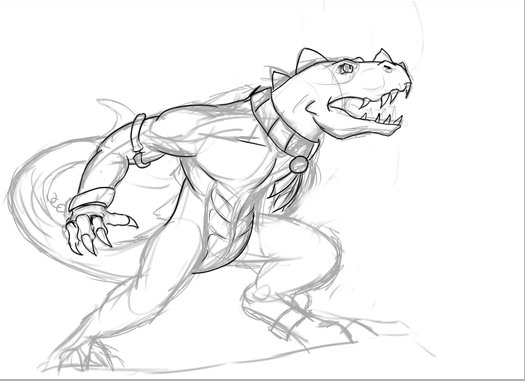
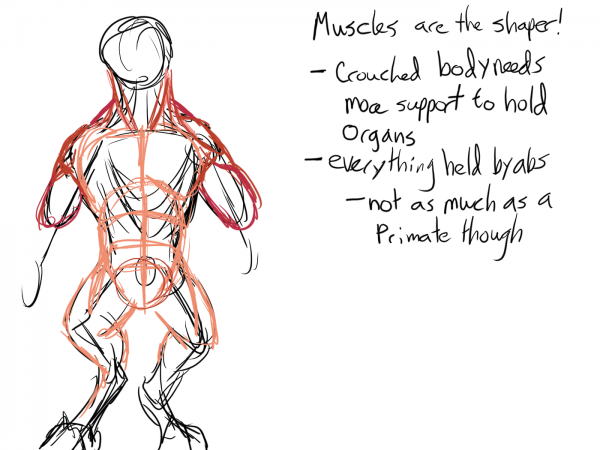
So, I commanded @Hyperborean to do half of a tutorial about muscle groups. And here it is.

Alright BASIC KROXI MUSCLES!

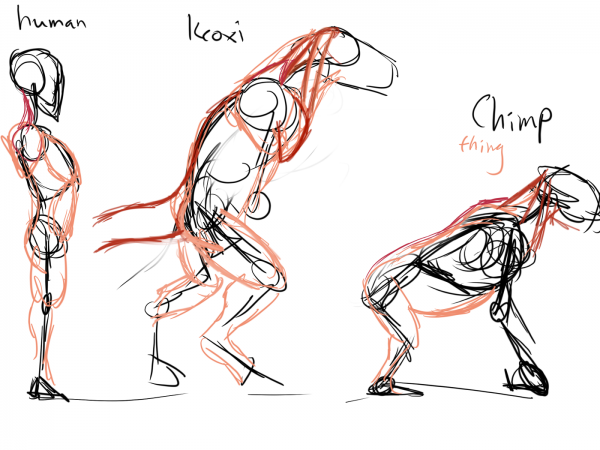
So when we look at a Kroxigor, or most of the lizardmen for that matter their posture is somewhere between a human and a primate. Now with humans, our organs are supported by our hips and out abs keep our backs straight, like a bow string actually. But on an ape like a chimp or gorilla all the organs are being held back by the abdominals, making them HUGE which leads to the barrel like gut we are familiar with seeing.

Lizardmen based on their models have fairly slim bodies for such large sizes, (now their are a few anatomical gaffs in WH models but I am going to pretend just for the sake of this discussion that they aren't there) now this can make them a bit hard to draw some days due to their appearance of top heaviness and getting all the portions to work. So when drawing their midriffs, go for an inbetween, it may not look as slim but your lizzie won't look like its gonna snap in half.

Neck muscles will also be somewhat different. Humans and Apes have these big honking trapizeus muscles on the back of our necks since, well, they stubby. You would not want to use actual lizard neck muscles since they are much more simplistic, the lizardmen are a far more complex form than that. For muscle references for a Kroxigor or Saurus neck look at something like a wolf neck or if you're looking to make your lizzy quite stonk, look at reconstructions of dinosaur neck muscles.


THUS ENDS the beginning part of Lizardman muscles focusing on the big guy the Krox. I will have neck and legs more in depth at a later point.

If I feel like it later, I might command that the other half be done just as impressively.
 
Back
Top