Ok, let's talk about glazes a bit.
A disclaimer: As I am not an experienced painter I might get some things wrong, so please, @y'all experienced guys, correct me where I am wrong.
EDIT: And while I wrote this wall of text some others already answered and posted some stuff I forgot.

So, what is a glaze?
In principle it is a wash.
It is highly transparent and like all paints it contains some sort of pigment, and some sort of carrier liquid.
In contrast to a shade it is not meant to darken the material though, although it will of course do that if you build up several layers of glaze over some bright color.
It will tint the base coat, and some glazes also cause a slight shine effect. That last effect is also the only meaningful distinction I could find between a wash and a glaze.
In general I would probably say that "wash" is the broader term, and both glazes and shades being special cases of washes, with the shades having the focus on darkening, while the glazes have the focus on just tinting and/or adding a bit of a glassy or glossy effect.
Where to get glazes?
Well, GW sells them of course. Those GW glazes are specialized, they are thin and rather shiny, and they make nice glass-like effects if you build up a few layers of them on a white base color. They are also great for tinting metallic colors without darkening them. You can see examples where I used glazes on my following models:
- I tinted a silver helmet on my Skink Chief using GW's Waywatcher Green. I also used it for my Balewind Vortex
Skink Chief
Balewind Vortex
- I used GW's Lamenter's Yellow to make the glass ball in the Skink Priest's staff yellow, and used the same technique on my Oldblood's Spear. But most importantly I used it for the Solar Engine of my Bastiladon
Bastiladon
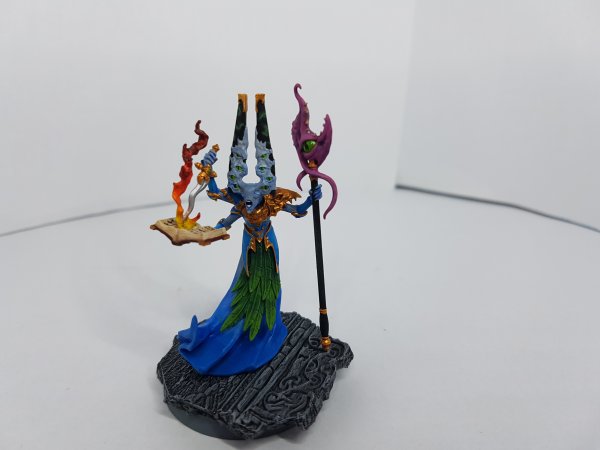
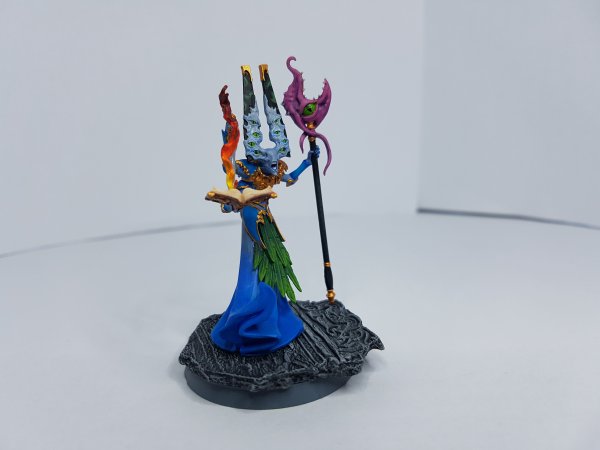
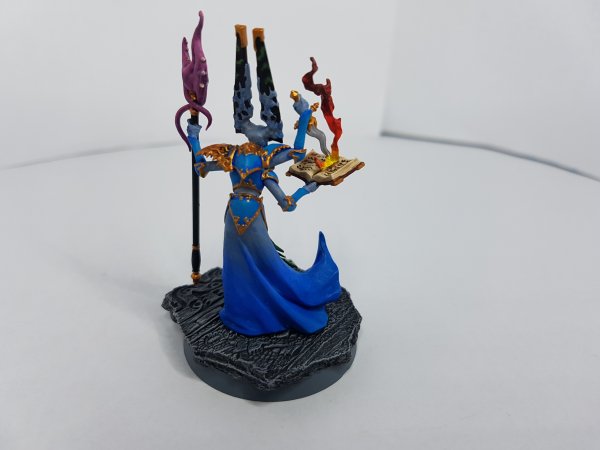
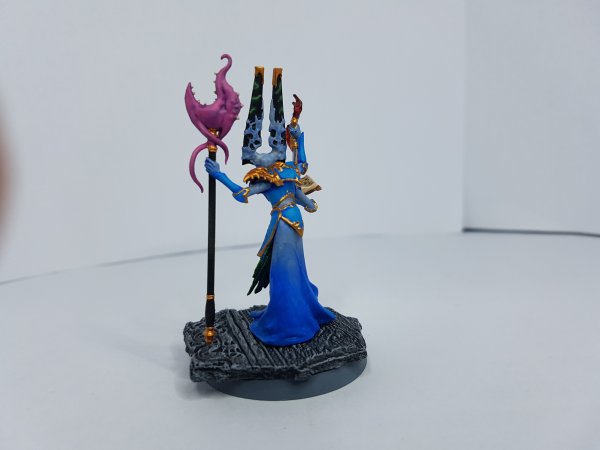
- I used GW's Guilliman Blue to tint my Tzaangor's skin (originally grey basecoated) and for making the blue glow on my Pink Horrors' weapons.
Horror
Ok, so those are GW glazes and I am sure those exist from other companies as well. I like those a lot. What about other glazes?
Well, actually you can make your own washes to act as glazes. In principle you just thin down a paint. Some notes about that:
- dark colors won't work well. You're creating a shade. Bright will do though.
- if you use water as the carrier liquid you will get to a point where the water behaves... well, like water. Your paint will get 'uneven' and leave water stains instead tinting properly. You can't do anything about that I guess. Using distilled water might help though, I haven't tried that. Better use some other carrier, like GW's Lamian medium, or airbrush thinner. I normally use water though.
- You will notice a slight shine. I don't exactly know what causes it but heavily thinned down paints shine differently than normal paints. You can use that to your advantage of course!
The cool thing about glazes is that they can actually make things brighter. So if you ever thought: "Dammit, I have some crevices here that I want to make brighter. If there only was 'reverse-shade' that flows like shade but could help brighten them up instead of darkening them..." Glazes might help there!
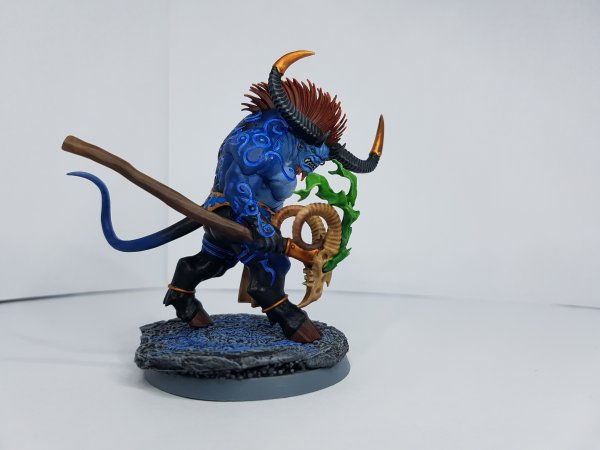
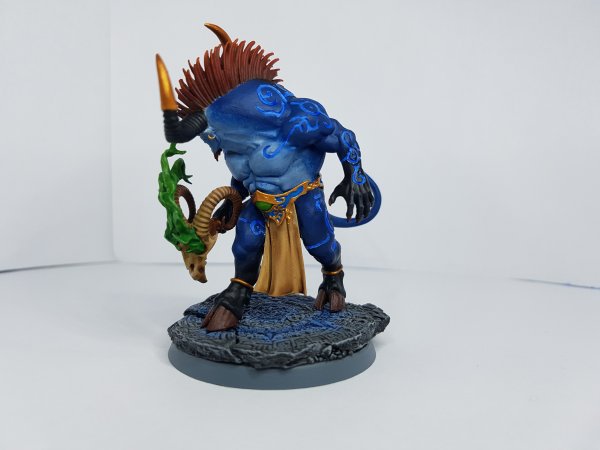
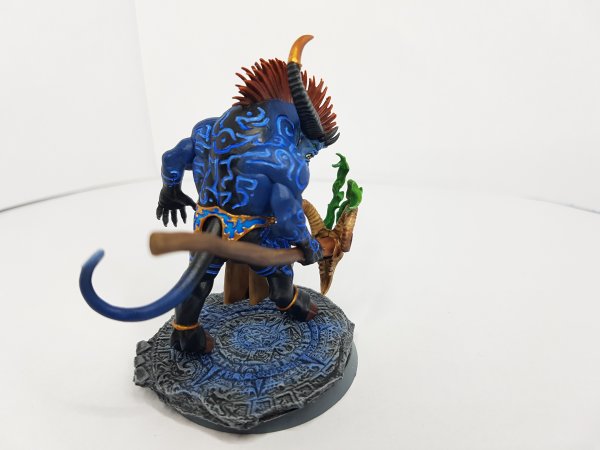
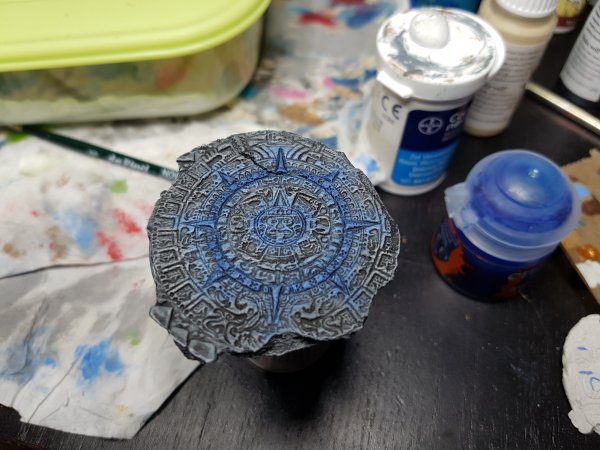
I used a homemade light blue glaze on my Ogroid Thaumaturge
Ogre WIP, because those sigils were too dark. Those were white, and glazed with Guilliman Blue. I wanted to brighten them up.
So (as suggested by other members) I thinned down a light blue and let it flow in. I was very sceptical first but it turned out great.
EDIT: Blending is something for which you can use both shades and glazes well. Reducing the "chalky" effect drybrushing leaves is a good example.
Ok, I think that's all I know (or think I know) about glazes.