-
The forum software have been upgraded to the latest version.
If you notice anything that looks off, or does not work, please let us know.
For more information, click here.
You are using an out of date browser. It may not display this or other websites correctly.
You should upgrade or use an alternative browser.
You should upgrade or use an alternative browser.
Blog Ritual's Army - Lizard on Lizard Action (For the Waaaaagh!)
- Thread starter Ritual
- Start date

Slann
Crowsfoot
Guardian of Paints
- Messages
- 8,344
- Likes Received
- 14,495
- Trophy Points
- 113
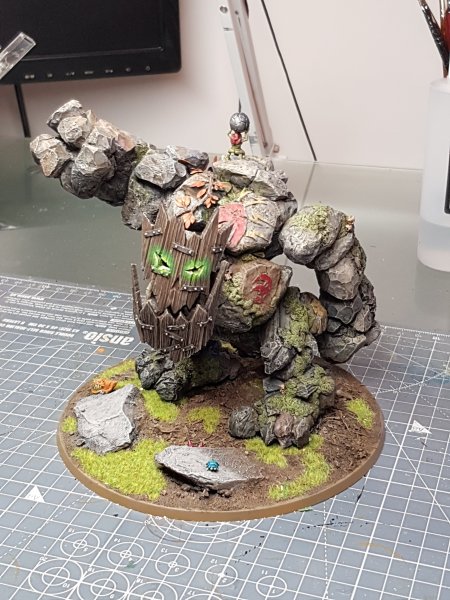
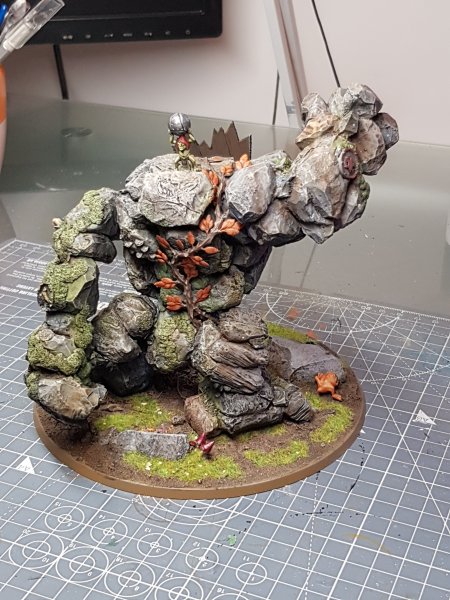
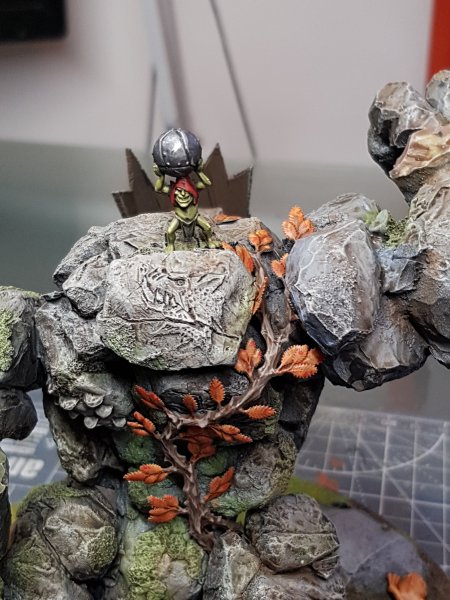
Another hour this morning and he's finished...
View attachment 44046 View attachment 44047 View attachment 44048
Looks cool, I really like the beetle and the leaves, they add a nice spot colour, glowing eyes are cool as well.
We were talking about Warhammer world last night and I think were going down for 3 days in October, better start saving.

Scar-Veteran
Ritual
Well-Known Member
- Messages
- 2,407
- Likes Received
- 7,407
- Trophy Points
- 113
Depending when it is I may be able to pop up for a game, depending on how long you were planning on being thereLooks cool, I really like the beetle and the leaves, they add a nice spot colour, glowing eyes are cool as well.
We were talking about Warhammer world last night and I think were going down for 3 days in October, better start saving.
Slann
Crowsfoot
Guardian of Paints
- Messages
- 8,344
- Likes Received
- 14,495
- Trophy Points
- 113
Depending when it is I may be able to pop up for a game, depending on how long you were planning on being there
Just waiting to find out Archie's holidays then will look at dates, but we are planning on trying to play for 2 days, if I can book the table.
Scar-Veteran
Ritual
Well-Known Member
- Messages
- 2,407
- Likes Received
- 7,407
- Trophy Points
- 113
Tables are normally pretty easy to get so long as you book at least a week or so in advance and there's no tournaments or school events on that day. Drop them an email as soon as you know the dates and let me know so I can try and wing it with the wife.... Though we're going to Ireland for a wedding at some point, so hopefully it wont clash.Just waiting to find out Archie's holidays then will look at dates, but we are planning on trying to play for 2 days, if I can book the table.
Slann
Crowsfoot
Guardian of Paints
- Messages
- 8,344
- Likes Received
- 14,495
- Trophy Points
- 113
Tables are normally pretty easy to get so long as you book at least a week or so in advance and there's no tournaments or school events on that day. Drop them an email as soon as you know the dates and let me know so I can try and wing it with the wife.... Though we're going to Ireland for a wedding at some point, so hopefully it wont clash.
Will do bud

Slann
Crowsfoot
Guardian of Paints
- Messages
- 8,344
- Likes Received
- 14,495
- Trophy Points
- 113
Scar-Veteran
Ritual
Well-Known Member
- Messages
- 2,407
- Likes Received
- 7,407
- Trophy Points
- 113
Various Tips & Hints from the 'Eavy Metal Masterclass
These tips are in no particular order, I'm just brain dumping everything I can recall right now.
- Mix the paints. All the time. Have a base colour you mix up and down into shades and highlights. Keep a note of what you mix. Don't just use a colour right out the tube, it'll never look right.
- Thin your paints way more than you are now. Forget 2 thin coats, think 4, 5, 6+ thin coats to build up that solid and smooth effect. Do not paint another layer until the one below is PROPERLY dry, you will cause texture in the paint, it might not show up straight away, but once you've accentuated it over the next 20+ layers it will be very prominent.
- Soft shading your shapes before you start working on properly shading and highlighting will help you in guiding where to paint.
- Always use a brighter base colour than you think you need, after shading them down it will always look darker anyway, and it makes life easier when you need to bring colour back into things without them looking washed out.
- You can get contrast into models in loads of ways, not just complimentary colours. You can use different hues of a colour, e.g. if your model is mostly muted greens, you could use a really intense green. That's still contrast.
- The eye has more colour receptors for blue than it does any other colour. It has the least to yellow. That's why yellow can be such a bitch to get right, the second another colour taints it it becomes very obvious. For that reason, consider your blues and yellows carefully. A low vibrancy yellow will often look bad next to... basically anything. A highly vibrant blue next to a muted colour will also look more out of place than if you had a high vibrancy different colour.
- Use source images. All the time. Google stuff, get a folder of images for textures, things, different lighting, times of day, etc. etc. No source images for dinosaurs you say? Use lizards. Snakes. Elephants.
- Look at 2D traditional painting. You'll see a lot of interesting tricks.
- Glazing colour back into things once they're shaded is easy. Thin down your base colour to the point where its basically off coloured water and then glaze that over - NOT A WASH (learn how to glaze, seriously) - and this will bring vibrancy and colour back to a shaded/highlighted area without too much loss of gradient.
- When you think you have highlighted something enough, go back and add another highlight.
- CONTRAST. ALL OF IT ALL OF THE TIME.
- Wherever two different things meet, you should have some kind of keyline/shading, e.g. where armour meets skin, hair meets skin, banner cloth meets banner pole etc. etc.
- Get good brushes. W&Ns7 are good, but their quality recently isn't as great, Rosemary & Co do a miniatures range that I will try out next.
- Use one brush for mixing and another for actually painting. You don't want to get paint in the ferule of your decent brushes, ever, at all.
- Seriously. Glazes. Glazes.
- Learn about colour theory. As much as you can. Get books. Read articles. Look at pictures.
- Seriously. Colour theory. Colour theory. Colour theory in practise.
These tips are in no particular order, I'm just brain dumping everything I can recall right now.
- Mix the paints. All the time. Have a base colour you mix up and down into shades and highlights. Keep a note of what you mix. Don't just use a colour right out the tube, it'll never look right.
- Thin your paints way more than you are now. Forget 2 thin coats, think 4, 5, 6+ thin coats to build up that solid and smooth effect. Do not paint another layer until the one below is PROPERLY dry, you will cause texture in the paint, it might not show up straight away, but once you've accentuated it over the next 20+ layers it will be very prominent.
- Soft shading your shapes before you start working on properly shading and highlighting will help you in guiding where to paint.
- Always use a brighter base colour than you think you need, after shading them down it will always look darker anyway, and it makes life easier when you need to bring colour back into things without them looking washed out.
- You can get contrast into models in loads of ways, not just complimentary colours. You can use different hues of a colour, e.g. if your model is mostly muted greens, you could use a really intense green. That's still contrast.
- The eye has more colour receptors for blue than it does any other colour. It has the least to yellow. That's why yellow can be such a bitch to get right, the second another colour taints it it becomes very obvious. For that reason, consider your blues and yellows carefully. A low vibrancy yellow will often look bad next to... basically anything. A highly vibrant blue next to a muted colour will also look more out of place than if you had a high vibrancy different colour.
- Use source images. All the time. Google stuff, get a folder of images for textures, things, different lighting, times of day, etc. etc. No source images for dinosaurs you say? Use lizards. Snakes. Elephants.
- Look at 2D traditional painting. You'll see a lot of interesting tricks.
- Glazing colour back into things once they're shaded is easy. Thin down your base colour to the point where its basically off coloured water and then glaze that over - NOT A WASH (learn how to glaze, seriously) - and this will bring vibrancy and colour back to a shaded/highlighted area without too much loss of gradient.
- When you think you have highlighted something enough, go back and add another highlight.
- CONTRAST. ALL OF IT ALL OF THE TIME.
- Wherever two different things meet, you should have some kind of keyline/shading, e.g. where armour meets skin, hair meets skin, banner cloth meets banner pole etc. etc.
- Get good brushes. W&Ns7 are good, but their quality recently isn't as great, Rosemary & Co do a miniatures range that I will try out next.
- Use one brush for mixing and another for actually painting. You don't want to get paint in the ferule of your decent brushes, ever, at all.
- Seriously. Glazes. Glazes.
- Learn about colour theory. As much as you can. Get books. Read articles. Look at pictures.
- Seriously. Colour theory. Colour theory. Colour theory in practise.
Last edited:
Slann
Crowsfoot
Guardian of Paints
- Messages
- 8,344
- Likes Received
- 14,495
- Trophy Points
- 113
- Get good brushes. W&Ns7 are good, but their quality recently isn't as great, Rosemary & Co do a miniatures range that I will try out next.
Strange you say that about W&Ns7
I thought my size 4 was a counterfeit (bought on ebay) it was that poor, bought 2 more from an online art retailer that seem better so far.
Scar-Veteran
Ritual
Well-Known Member
- Messages
- 2,407
- Likes Received
- 7,407
- Trophy Points
- 113
Size 4?! What are you painting? A house?!Strange you say that about W&Ns7
I thought my size 4 was a counterfeit (bought on ebay) it was that poor, bought 2 more from an online art retailer that seem better so far.
But yeah, they're hit and miss right now for some reason. Definitely going to try something else next. Need to replace mine after pay day, they've had a hell of a battering this year.
Slann
Crowsfoot
Guardian of Paints
- Messages
- 8,344
- Likes Received
- 14,495
- Trophy Points
- 113
Size 4?! What are you painting? A house?!
But yeah, they're hit and miss right now for some reason. Definitely going to try something else next. Need to replace mine after pay day, they've had a hell of a battering this year.
Haha, I have 4 down to 000
I use 1 and 00 the most
Scar-Veteran
Ritual
Well-Known Member
- Messages
- 2,407
- Likes Received
- 7,407
- Trophy Points
- 113
I use 1 for basically everything... I generally go for 00, 0 or 1... I have a 2 and 3 as well I think, but barely ever touch them.Haha, I have 4 down to 000
I use 1 and 00 the most
Scar-Veteran
Ritual
Well-Known Member
- Messages
- 2,407
- Likes Received
- 7,407
- Trophy Points
- 113
A project generally lasts 4-6 weeks and is split between the 10 eavy metal members, that could be painting the models for the photos on boxes of a release, etc. So it could take one person 6 weeks ot paint a unit of 10 models at 40 hours a week, plus they over time basically every weekend to get stuff done.
A huge amount of time. Basically.
Slann
Crowsfoot
Guardian of Paints
- Messages
- 8,344
- Likes Received
- 14,495
- Trophy Points
- 113
A project generally lasts 4-6 weeks and is split between the 10 eavy metal members, that could be painting the models for the photos on boxes of a release, etc. So it could take one person 6 weeks ot paint a unit of 10 models at 40 hours a week, plus they over time basically every weekend to get stuff done.
A huge amount of time. Basically.
Well that makes me feel a lot better about trying to improve, if you would have said they can knock a display quality model out in a week!
Scar-Veteran
Ritual
Well-Known Member
- Messages
- 2,407
- Likes Received
- 7,407
- Trophy Points
- 113
Some of them can, Aiden's Artemis that was in White Dwarf recently was done in a week of spare time and is GD quality. It's certainly do-able with the right model and enough practise.Well that makes me feel a lot better about trying to improve, if you would have said they can knock a display quality model out in a week!

Slann
Aginor
Fifth Spawning
- Messages
- 12,256
- Likes Received
- 20,177
- Trophy Points
- 113
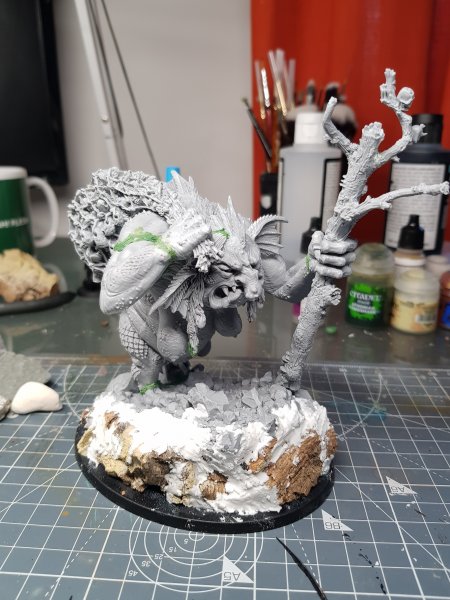
View attachment 44286
Finished green stuffing and got the base built up. I'll be able to finish off the base tomorrow and get it primed up.
GW's sexiest model!