• The forum software have been upgraded to the latest version.

    If you notice anything that looks off, or does not work, please let us know.

    For more information, click here.

Tutorial How to sculpt lizardmen: All your base...

Re: You advise me and I'll sculpt it

Caprasauridae said:
Ondjage: Do you mean something like this?

Well, yes:P

Now I feel like an idiot.

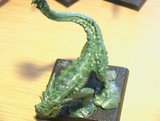
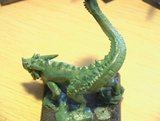
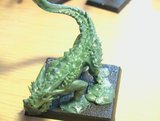
AWESOME model though
 
Yep, the greatweapon saurus hero is Rikards sculpt as well. :smug:
 
First weekend in AGES I've actually done stuff!

Hopefully this continues, but for the moment I've decided to go a little heavier in detail and explaining the choices I've made with pieces.
AUT_1969_zps974520df.jpg

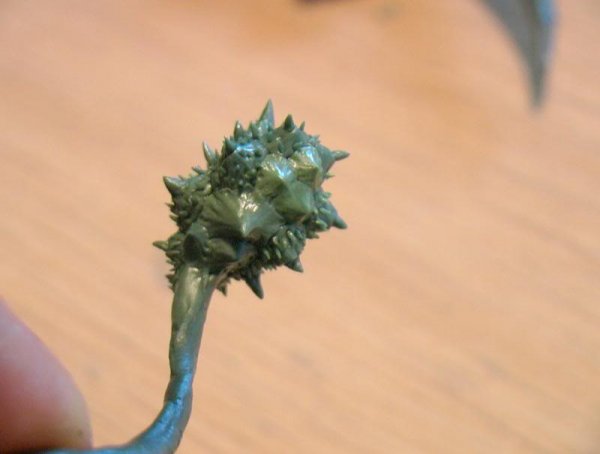
To pick up from where I last was, I explained the pros, cons and realistic (as far as is realistically possible) considerations that I like to go through when creating something, I like to look at what it is, does and supporting artwork. I also like starting out with bits that are highly fiddly and likely to annoy me as once they're out the way things are all gravy from that point on (in theory).

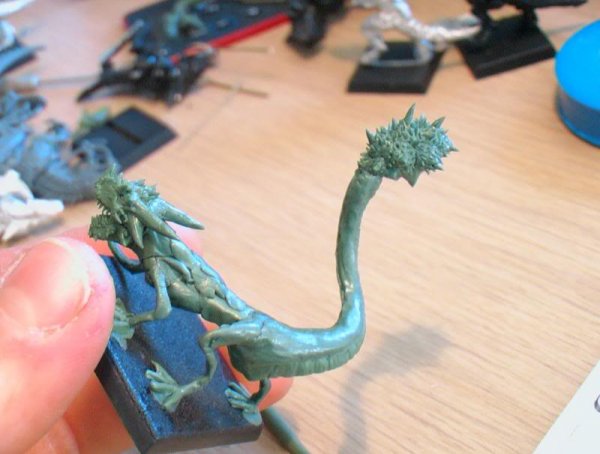
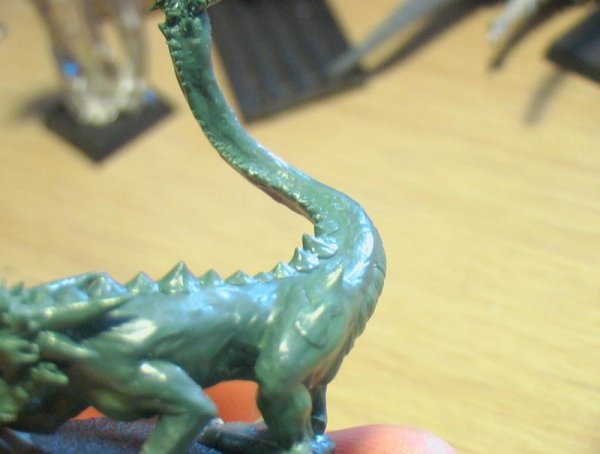
With that said, I start off from finishing the work on the spikes on the tail, though luckily at this point most of it is done and all I have to do is fill in the blanks (or scales in this case). My reason for the under side scales on the club end not being like the ones on top is the same as for a Tarantula, flickable spikes on top makes sense, less likely to get caught in anything, easier to flick off and you don't need to over/off balance yourself quite as much in doing so (it's also a perfect excuse for me to not have to spend AGES sculpting these scales all over the bottom too).


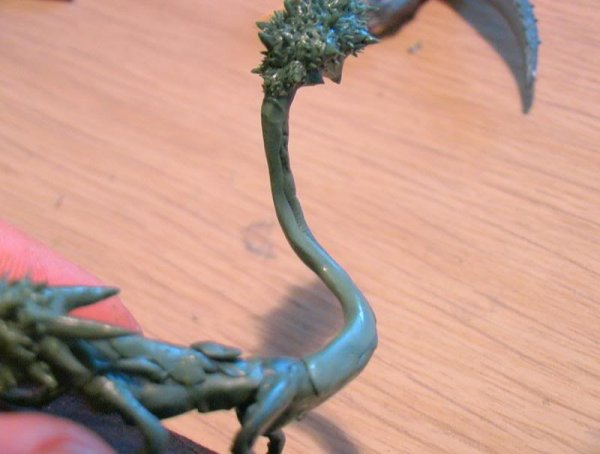
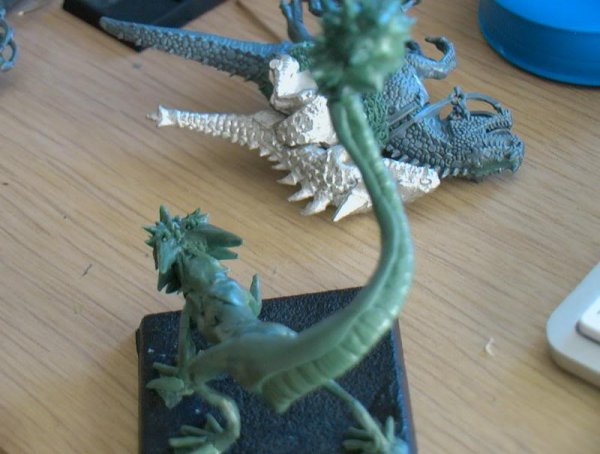
Next bit is to lay down some of the muscle bands to the tail and create some thickness to it. I know very little on dinosaur anatomy and do my best to look at research books and sculpts to at least try to get a feeling, both for the muscles and the movements/stresses involved and although a creature like this does not exist in the fossil record, it's still possible to get an idea of what is needed (I look at large sauropods for some help on this, as some have large whip like tails). This same pattern of muscle bands can be seen in other dinosaurs too, so I start by layering down bands (top first, then bottom, then the middles section on either side and rub vigourously with metal and wooden tools to hide the joins*)


*Something new I thought I'd try here to help in deciding which putties to use.
Green stuff: Big problem with it here is it's bubble gum like consistency, it means for joining two separate areas, even when both are freshly mixed, that you have to really press, work and rework the joins with metal and wooden tools to get the two different areas to blend together and hide the join, something that is nowhere near as long or irritating if you're using softer baking clays like fimo or sculpeys.
AUT_1970_zps3415c572.jpg
AUT_1971_zps3f6c7d51.jpg
AUT_1972_zpsf94c92ec.jpg

I also use lighter tools like clay shapers to add in shape on the underside of the tail and a bit of texture (though if you're planning on casting your work, don't go too light with detail otherwise it might not show, especially if you're casting in metal).

I now begin to move on to the thighs and legs:
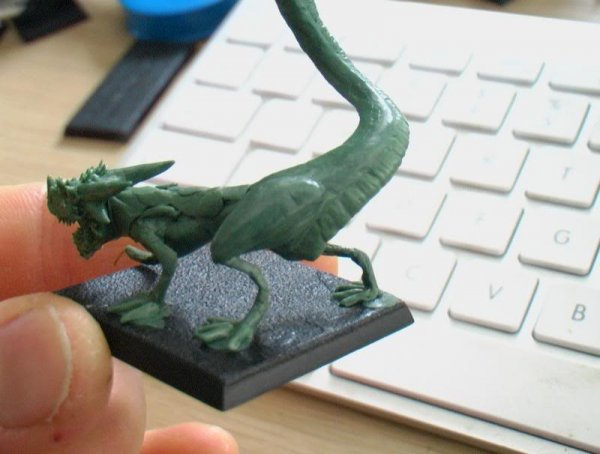
It's worth mentioning here that considering factors I've already mentioned come back into play, so for example the whole, long tail that gets flicked business. In order to help stabilise such a heavy and mobil tail, you don't just need a wider pelvis and stance, you need bigger feet to help spread the weight as it gets rocked back and forth and larger quads, adductors and abductors to support and stabilise the weight as it shifts from one side to another in mid tail swing.*

These muscles will also need to have quite a large spread across the body, they don't attach at one point, there's a considerable amount of spread across the tail and torso to allow for shifting and unbalancing of weight.

*Anatomy note:
It's always worth bearing in mind that even though this is a four legged creature with a tail, the anatomy is going to be rather similar to humans, there's four limbs with similar level motions, so you therefor will need Quads, hamstrings, adductors, abductors, stabilising muscles, etc. I will cover more of the upper body muscles a little further down the page.
AUT_1973_zps628f09c8.jpg

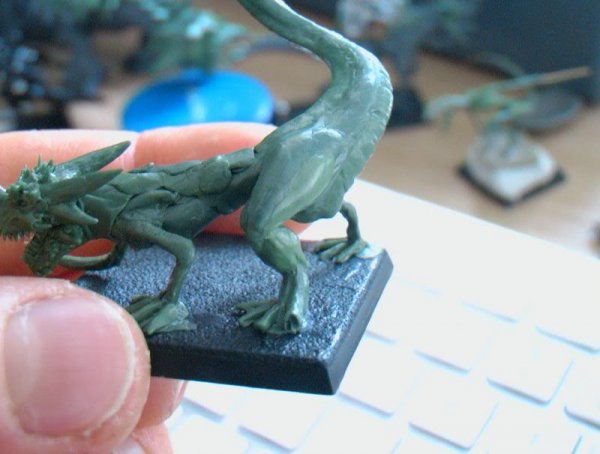
For these reasons I've also gone with using four toes on the feet instead of three, bit more support and wider foot pattern too, this could also tie in to help explain why this creature is also supposed to be aquatic (don't look at me like that, I don't write the rules, if I did there would be more unicorns). Sculpting feet can be a bit trial and error, depending on the look you're after, I'd have a look at larger dinos like triceratops, though in this instance I've gone with a more of a theropod style of feet. The sockets are for claws which get added in later. The knuckles in various places look a little off, but it's better to come back to these in the snagging list stage which comes towards the end.
AUT_1974_zps7d91a33a.jpg

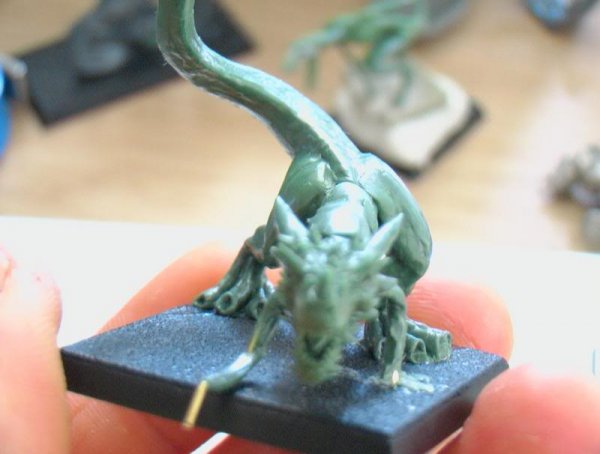
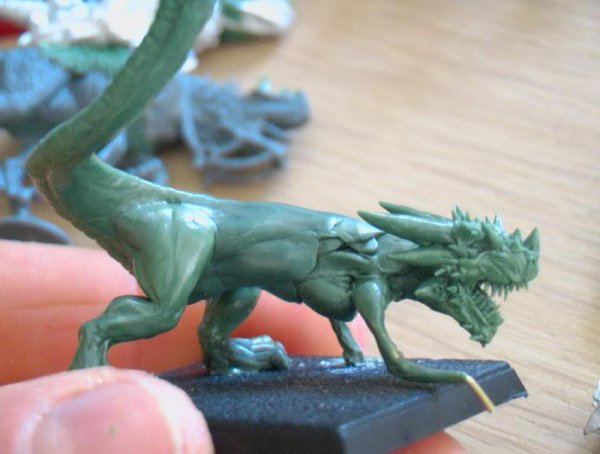
Having worked on the other side now in the same fashion I can begin to work towards the head, first thing I do is look at supporting muscles such as you would get on a human or humanoid, because of the rib cage you will still have muscles like the TVA (transverse abdominus), rectus abdominus, and various intercostals and obliques.
AUT_1976_zps9360b0e7.jpg
AUT_1978_zps2ad60617.jpg

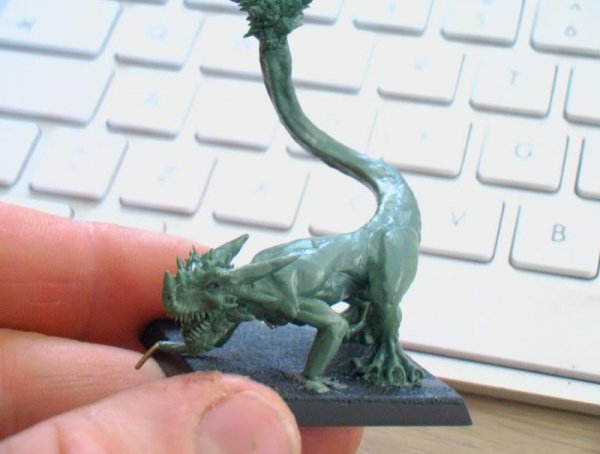
Work starts now on what would effectively be the torso area on a two legged creature, so you still have muscles like the lats, rotator cuffs end even bicep and tricep muscles like on your arms. This is because it all comes down to movement, doesn't matter on the shape or size of a creature, if it can mimic movements you do, then it will have a very similar muscle design set (look at the muscles in the front leg of a dog and compare it to a person's and you'll be surprised at how similar they are).
AUT_1979_zpsd7916d32.jpg

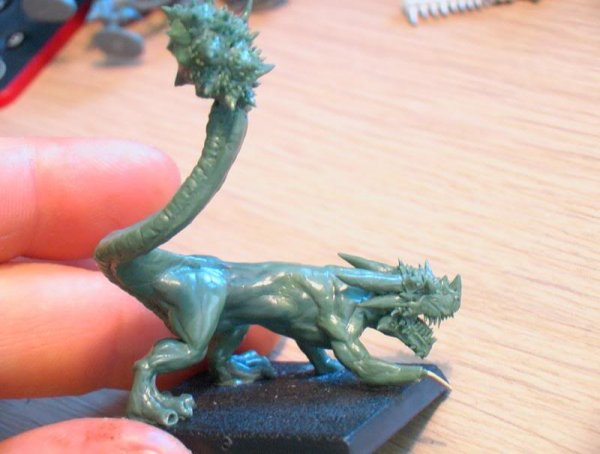
This side is a better photo and should help you see what I've been getting at. I should also add at this stage that, the muscles will look blocky, this is by now means a final stage, it's so I can get down greater detail and landmarks before moving on to the next stage of design where I'll be adding detail, skin texture and scales*. I haven't gone hyper toned or lean but that is because there's little point given that it's not what I'm trying to achieve with the end result.

Best to think of this as a skinless stage if that helps. :)

*Note on clays:
This is another disadvantage green stuff has over other lighter putties, it means you can lay down a basic muscle layer then add detail to it, due to how viscous it is and how quickly it dries.
AUT_1980_zps18431151.jpg
 
Awesome ,
it's like a crossbreed of Thorny Devil and Postosuchus!
 
You make the sculpters at GW lock like amaturs. I will realy think of the things you say wen I eventually comes around to sculptin :D g.
 
Sorry about the long delays on this, lots been happening, but hopefully will get going on this again soon.
 
No worries, take your time. You are doing this for fun and for your own use, so no need to take stress. The end results are always worth the wait.
 
Caprasauridae said:
No worries, take your time. You are doing this for fun and for your own use, so no need to take stress. The end results are always worth the wait.


Thanks mate, it really means a lot.


Hi everyone!

Just to say, thank you all so much for the patience, I have finally got more of these nasty exams out the way and will be able to carry on with this topic later this week (most likely on the weekend). :)
 
Dyvim Tvar said:
Any progress?

Yes indeed!

First off, I'm very sorry about how slow things have been on here recently, combination of additional assignments, work, prepping for my first body building contest, family concerns and trying to actually finish the things I start (this is sculpture related) have all slowed me up.

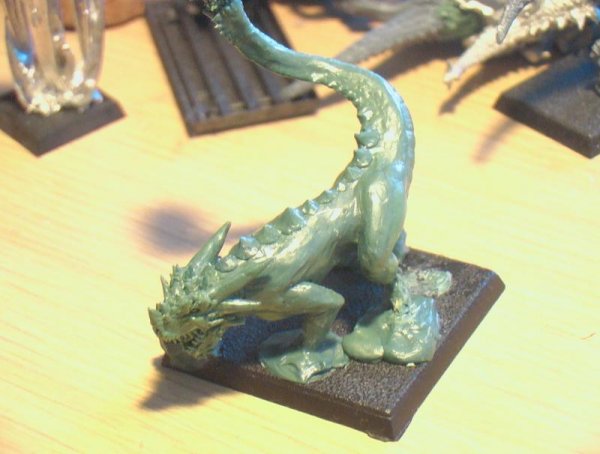
I am working on the Razordon piece still, I had to do some back tracking, not ideal but occasionally it happens and I'm actually trying to work this in to the tutorials, as I think that recognising and knowing mistakes is very important, it helps you deal with any mistakes you make (which can be very demoralising) and show you that there's no such thing as the perfect sculpt that goes 100% right from the start.

Hoping to have some piccies up this weekend and more info.

Thank you all for being so patient.
 
I've just tried uploading the next segment, but keep getting error messages, is there a site issue?
 
Still can't seem to upload it, same error messages.

So I've posted a link to my DA account with the same article there for you. :)

http://backsackandjack.deviantart.com/journal/Another-mini-adventure-Razordon-464361024
 
did you remember to convert to tags ?
 
n810 said:
did you remember to convert to tags ?


Yes, it's a different kind of error though, the screen goes white with a dialogue box.
 
th_AUT_1987_zps191ef6da.jpg TEST
AUT_1987_zps191ef6da.jpg TEST TEST

hmm that worked... but when I tried reposting all the pics I got the same error you where seeing...
perhaps there is some hidded picture limit per post... maybe if you split it between 2 post it will work ..?
 
@N810
Worked out what was causing the problem, turns out it wasn't the images at all, but a text emote it didn't recognise.


So it has been rather a long time*


Anyways, despite getting caught up with ideas and not finishing anything at all, I've hardened myself and gone back to finishing what I started. This is proving difficult to say the least, especially when you realise you make mistakes. Mistakes that require you to back track can be exceptionally crippling for moral and your confidence as you're having to cut back loads of hard work and go at it again, luckily there are ways to soften this blow.

It is for these reasons I have included this as a little part of the update on this project. It also helps to show that everyone makes mistakes (yes, even me) and no sculpt will ever go 100% right from the word go (I can, if it helps, show you some more examples on the banshee/Wych I'm working on as I had to re-work a lot of that).

So what was the mistake?
The mistakes were two fold, the first being the previous stage (building up muscles)
The second was the feet.

First mistake.
Fleshing out as I did previously only works if you're not using thick air drying clays or epoxys, as you can add detail over the top of it, better yet, a thin detail layer of clay is also possible for adding to a piece, but again, not so with green stuff.

Second mistake.
The ideas behind the feet might have been good, but the execution was not, too rushed, too lacking in detail and if I'm being honest, they were lacking in more research before construction. Doing things like this is exactly what I mean when I say, these can come back to bite you, if you don't research or reference your subject thoroughly enough.


So how do I soften the annoyances of re-sculpting?
Try to soften the blow is the way to go on this one, the mistakes are as I've mentioned above, so to deal with it I space out the work load, the first thing is to cut off the old feet and much of the lower section of each limb, this means I have a bit more wiggle room when it comes to the resculpting stages. The next is to then progress further on the project with other areas, which in this case means.....more scales.....yes....scales.... I swear sometimes it's all I ever seem to do!

And yes, I know it's all entirely self inflicted....


Onward!
This means I now get to advance the project and address the issue I mentioned on the bulky armature front (as mentioned in first mistake). Best way to do this is with scales, get an idea and lay them down. It has the advantage of minimising as much cutting away as possible by covering bland areas with scales (areas you won't have to see). It also means I get to experiment a bit more with the scales too while enthusiasm as at its peak (afterward all scales have been done, the idea of scale experimentation is not an appealing one).

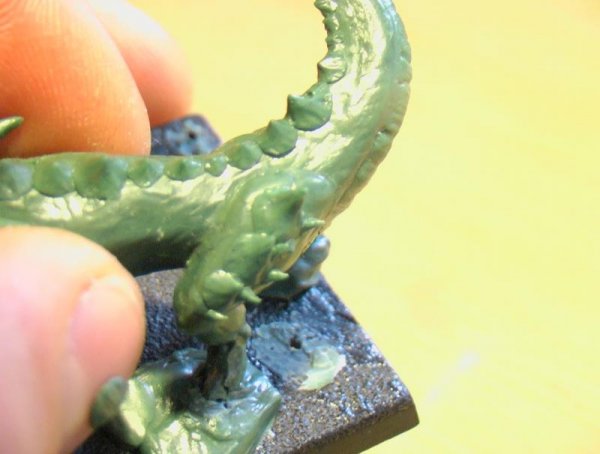
So best place to start is with the back thighs, work on the big ones and get smaller as you work outwards. The principle here is to have a play, experiment, even if you have a nice approach with scales, they really do come in all different shapes and sizes and with different models, different scales are essential to avoid blandness.

AUT_1987_zps191ef6da.jpg
AUT_1988_zps29575c42.jpg
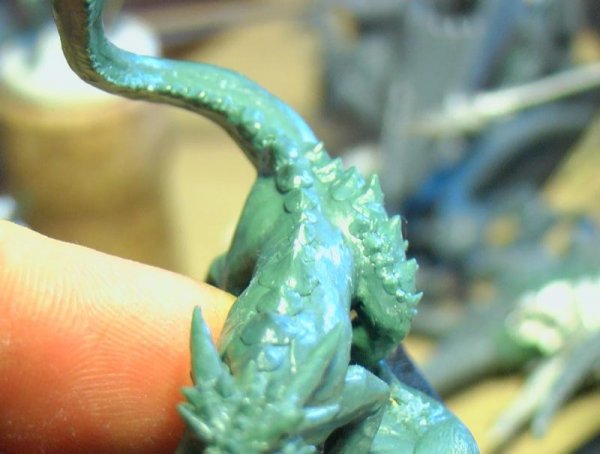
I also break with tradition and practice by sticking thin, longer spikes into gaps between the larger ones, this will also help to tie in with the thin spikes on the end of the tail, especially if I increase the number of them, the closer I get to the tail end. This also stops the mini from looking like a cut and shut.

AUT_1989_zps55f54410.jpg
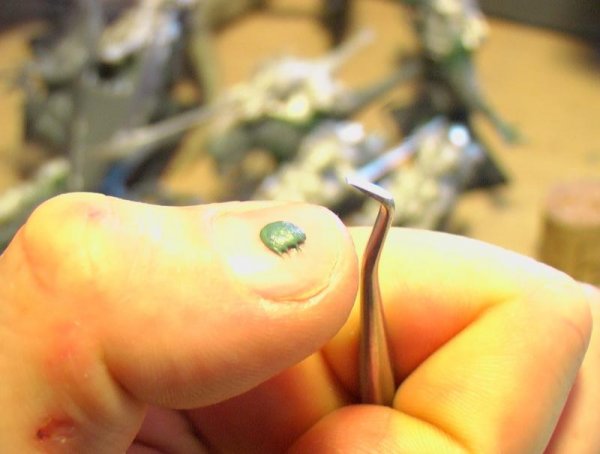
While on the subject of scales, I figured I'd throw in a sneaky peak at how I do scales and teeth; rolling out tiny blobs of GS is a royal pain, especially as sebum from sweat and your hands, removes the sticky quality of green stuff, which is not what you want when doing teeth and scales/spikes.

AUT_1990_zps394b6d35.jpg
 
Scales placement and patterns.
I tend to lay down individual rows of scales starting with the centre most ones (larger ones, so I get to have more of an experiment with shapes an detail), I also leave deliberate gaps between these rows, this allows for filling the spaces afterwards and giving a little more structure and purpose to the patterning.

AUT_1991_zps1ddfdce5.jpg th_AUT_1993_zps04e91ccc.jpg
As for the legs, I'm only adding the bare minimum here at the moment, until the lower legs have been done, there's no point sculpting anything below there, it also gives me a little more time to think and plan ahead as I need to be mindful about areas with a lot of skin movement (areas like elbows and knees as scales over the top could severely hamper movement.

th_AUT_1992_zps4becb13d.jpg
I continue now by filling some of the holes, though scale work is still at a bare stage, where I can see what works, what doesn't and give myself more of an idea of thinking ahead for the next set of stages.

th_AUT_1994_zps92320406.jpg
As I said before, sorry it's taken so long, but I hope it was worth the wait and I should have some more updates much sooner than however many months it was.

*rather, as in stubbing your toe and simultaneously standing on lego bricks rather hurts.
 
Hey everyone,

This next update is going to be a while, I've been off work for two weeks with carpel tunnel and unfortunately it looks like I've got nerve damage to two my fingers (and of course this is all in my main sculpting hand).

Sorry about this.
 
That sucks ...

More for your personal health than the fact that we won't see any work from you for a while. Take it easy and get better.
 
Back
Top