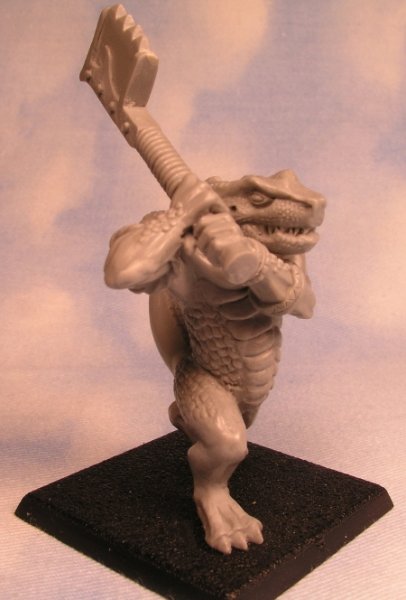
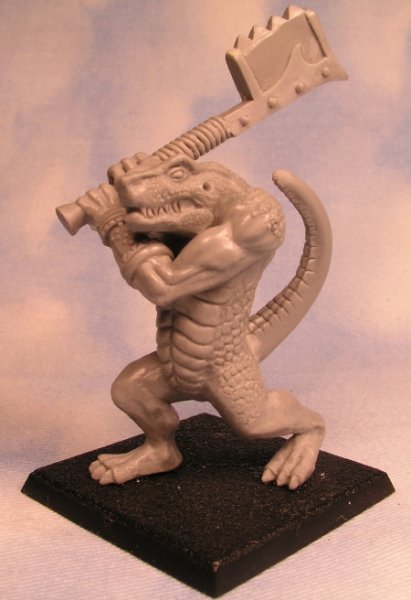
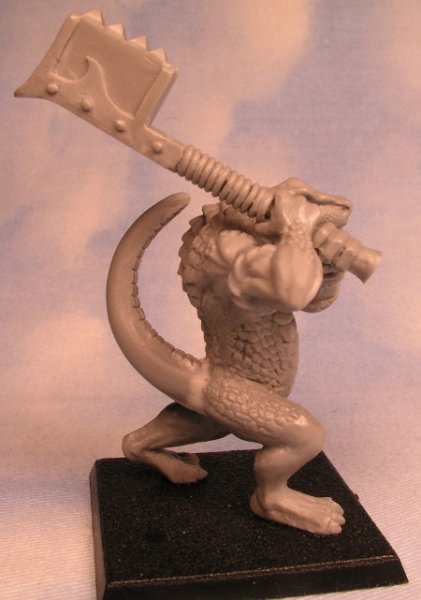
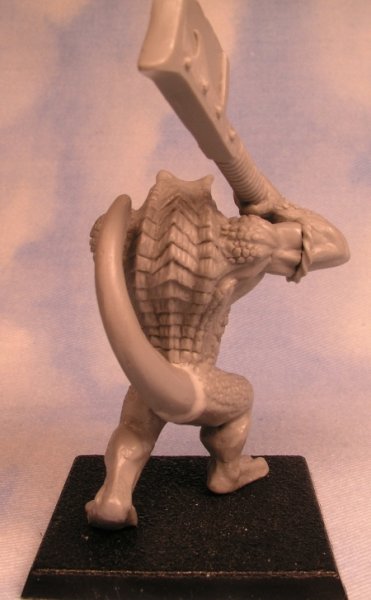
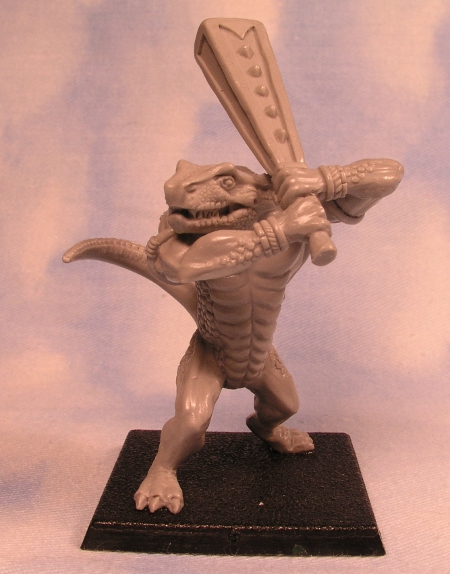
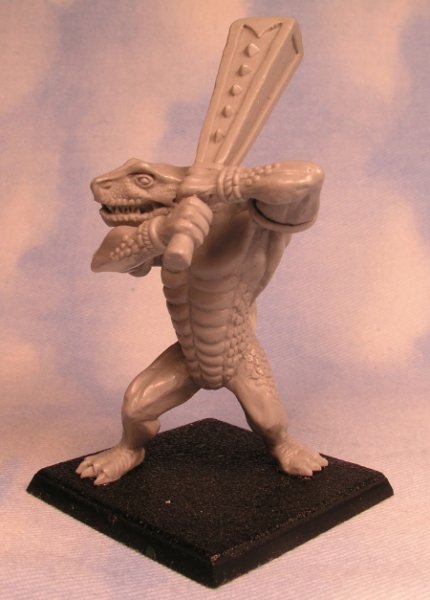
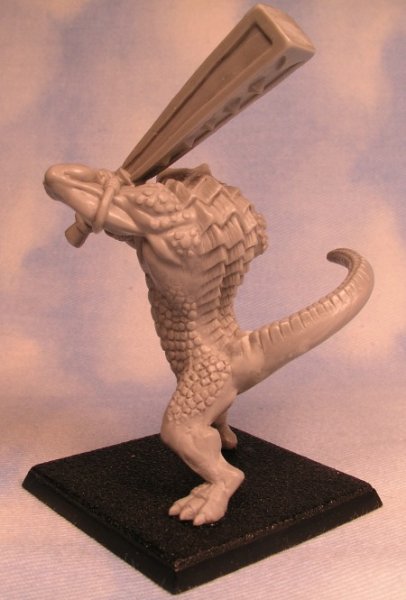
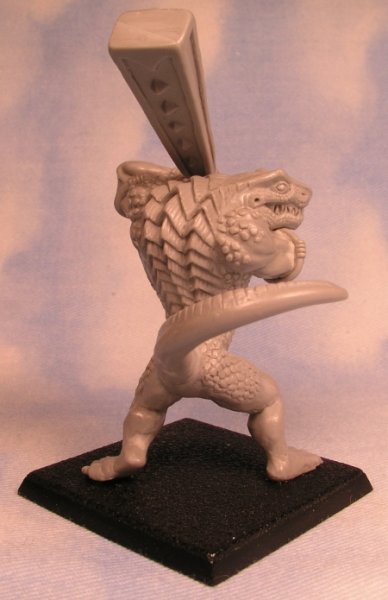
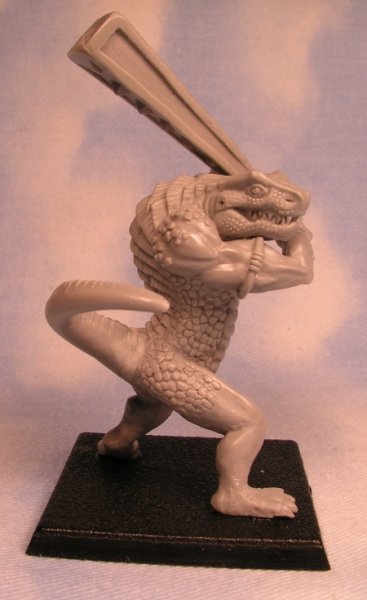
You have to have some understanding of how bones and muscles connect and how they extend and contract to make the body move. I can occasionally get away with doing a limb all in one go, but even 15 some years of experience, generally speaking I always work in layers, taking usually five separate steps to build up each body part:
1) wire armature, i.e., "the bones";
2) major muscle masses at 2/3rds full size;
3) final 1/3 of muscle masses, including tying muscles together where they join;
4) layer of skin, including muscle striations; and
5) texturing, including veins if any should be visable, fur, scales, etc.
There are no tricks. This stuff takes practice, concentration and a desire. And you will fail 99 times before you get it right, so steel yourself for disappointments. Remember however, your failures are actually something to be grateful for. The minute you are no longer able to see your own failings, you cease being capable of improvement.
With that in mind, here are some guiding principals, which I will call "tips" for lack of a better term:
Tip # 1: Work on your artistic skills. You can't master sculpture until you learn to visualize exactly what it is that you are trying to do. For this, to me there is no better training than drawing in 2D. Learn to draw things from different angles.
Tip #2: Your armatures should have very definite joints and should be made to the correct proportions and take into account the added mass of the finished piece. Again, know your anatomy, both for two legged creatures and four legged creatures. Know how they are similar and how they differ. Get some good anatomy reference books and study them.
Tip #3: The armature wire should be thick enough to hold up the work and not bend while you are working. On the other hand, arms and leg joints that you might want to adjust the pose of during the process should be thinner wire, so plan ahead!
Tip #4: Add masses to your work in small sausages (or balls, or triangles, or whatever other shape makes sense). DO NOT try to do it all at once. (See above, the STEPS you should break things down into).
Tip #5: When you work in 3D, get used to turning your piece over and over in all 3 planes (yaw, pitch and roll, if you will), because if it doesn't look right from all angles it probably isn't right from any angle. Learn to subtract putty or clay from your work as you go. You should be equally comfortable with a clay shaper or spoon burnisher as you are with a knife, carver or loop tool. There is no way to make too much material look right until you subtract what you don't need.
Tip #6: Know your putty and its properties. You need to play with the stuff and not just jump right into sculpting with it. Every putty I work with is different, and sometimes I mix two or more putties together to get the characteristics that I want for what I am sculpting. For instance, a gummy putty might be better for flesh, but will simply not work if I need sharp edges and intend to file the piece after it has hardened. Consider the following questions:
- What is the curing time of the putty?
- How quickly will heat decrease the working time and what is the temperature of the room I am working in?
- How elastic is the putty?
- How soft or hard is it when first mixed, and how does that hardness increase as time passes?
- How carvable, drillable, sandable is the putty after it is cured?
I may come back and add to this, but as I sit here right now I think this pretty well covers the basics. Remember to have fun!



 and if you have a moment check out my paint log and tell me what you think!
 Maybe this will stir things up a bit?